Showing posts with label Chetham. Show all posts

Wednesday, July 5, 2017

Thornfly Dun; Landrail Dun; Dark and Light Sedge; or, Silverhorns


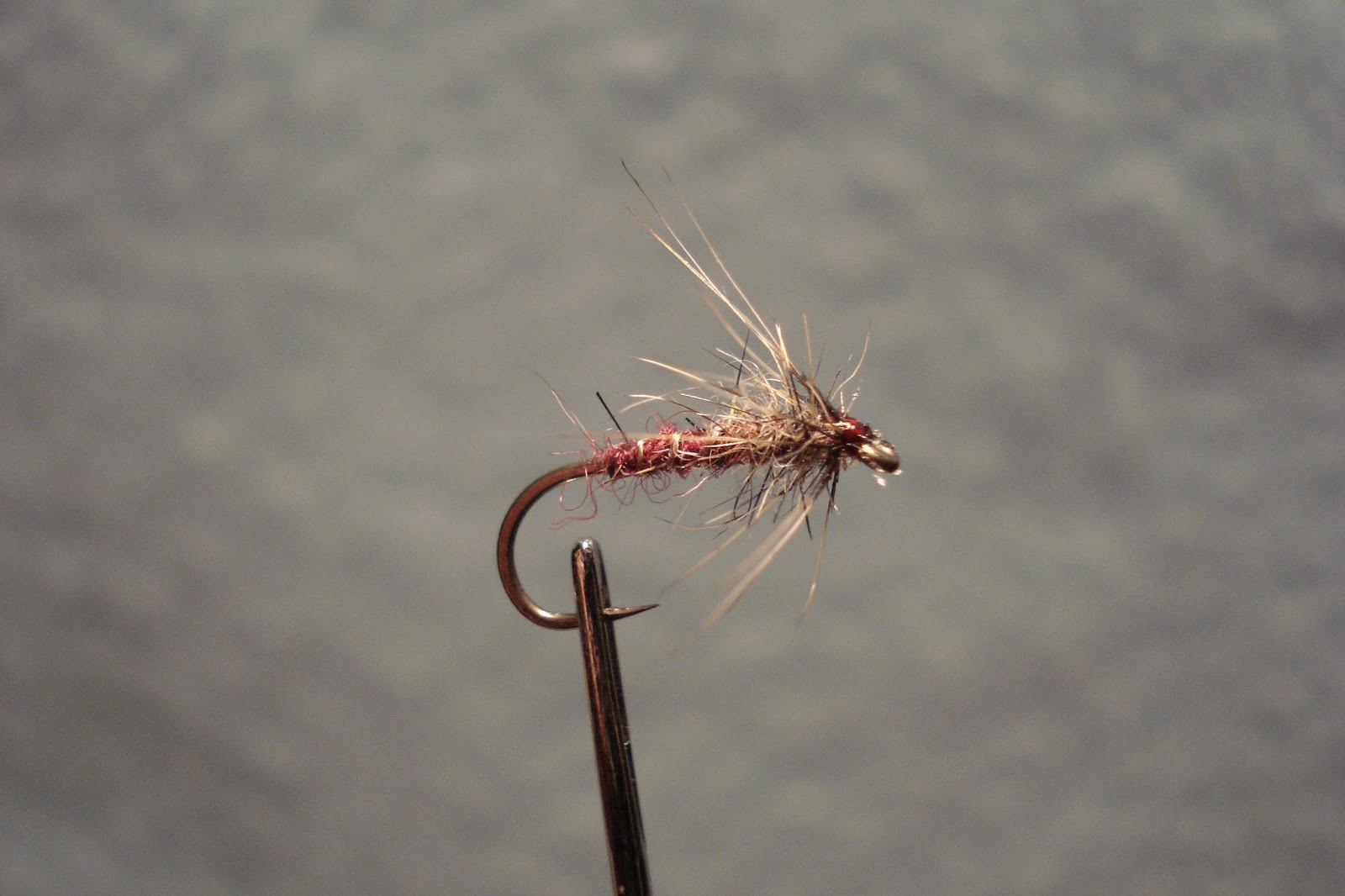
This dressing substitutes American woodcock undercovert for landrail undercovert. It is dressed more heavily to align it with William Blacker's Red Palmer Fly, which T. E. Pritt lists as a precedent. It finishes the fly in front of the head rather than behind it. 

Hook:

14-18
Thread:

Orange
Body:

Orange silk
Hackle:

American woodcock undercovert
Head:

Peacock herl


Two distinct strains of dressing the Thornfly Dun seem to exist. Drawing the connection between these two pattern groups makes two assumptions: first, that the name Thornfly (in whatever form) corresponding with a hatching period beginning in late May or early June correlates different representations; second, that these dressings are, as the name dun often seems to distinguish, caddis or sedge flies. The more popular dressings exhibit a general orange-red cast in the bodies, hackles, and heads. They have much in common with the Light Dun that Michael Theakston describes in his List of Natural Flies (1843). However, many of the dressings also emphasize a darker overall color, with purplish black bodies and darker dun-colored hackles. Dressings for this June hatch have more in common with the Silverhorns sedge that Alfred Ronalds lists for June fishing in The Fly-fisher’s Entomology (1837). 

In the former category is the Thornfly Dun, no. 49, that T. E. Pritt includes in Yorkshire Trout Flies (1885) and its 1886 reworking, North-Country Flies:

“Wings.—Hackled with a Landrail’s feather, taken from under the wing.
Body.—Orange silk.
Head.—Peacock herl.”

Pritt notes that the Thornfly Dun is “a very excellent fly in a good bold brown water on warm days in summer, from June onwards. It is a variation of No. 5 [the Brown Owl], and equally useful. Dressed with a redder feather it is the same fly as that known as Blacker’s Red.” After Pritt, Harfield Edmonds and Norman Lee seem to offer two variations on the Thornfly Dun for June sedge dressings. They recommend, like Pritt, their Dark and Light Sedges for fishing from the “middle of June to the end of the season.”

Despite the reference to Blacker, Pritt’s Thornfly Dun seems more aligned to manuscript dressings like Large Thorn Fly Dun recorded by Jonathan Pickard in 1820 and printed by Robert L. Smith in The North Country Fly: Yorkshire’s Soft Hackle Tradition (2015): “Orange silk, peacock harl in the head feather from the inside of a landrail’s wing.” Smith also prints another 1820 list by William Robinson with an almost identical dressing for the Thorn Dun Larger or Landrail Dun.


This dressing uses gold Pearsall’s gossamer silk, substitutes a mixture of ginger antron and orange acrylic for orange mohair, and applies gold twist rather than tinsel.


Pritt’s attribution to Blacker’s Red is presumably to the Red Palmer Fly that William Blacker includes in his Art of Angling (1843). The color scheme falls into the tawny category, essentially the same as Pritt’s Thornfly Dun, except that Blacker's fly is dressed as a palmer:

“Hook ff.—Body, Red or orange mohair, with gold twist or tinsel up the body.
Legs, Two red hackles, wound on from the tail up to the head, in rotation with the tinsel.”

Blacker’s Red Palmer is the same as the Red Palmer that John Kirkbride includes in his Northern Angler (1837), except that Kirkbride recommends occasionally using gold wire as a rib.


This dress of James Chetham's Thorn-Fly dresses a winged fly into a soft hackle, using dove covert for the light gray mallard's wing.  It uses a mixture of black antron and raw Black Welsh Mountain wool for lamb’s wool.


In the latter, darker category of Thornfly dressings is James Chetham’s Thorn-Fly. In his Angler’s Vade Mecum (1681), Cheatham includes “Another Catalogue, of Flies, practiced by a very good angler,” in addition to the list he reprints from The Complete Angler (1657, 1676), that includes the Thorn-fly as the first choice for May. Chetham’s dressing calls for a “Dubbing of Black Lambs Wooll, and Dub’d with Black Silk, Wings of a Mallards light Grey; Note that all the Feathers got from Mallards for Wings, ought be got from a wild Mallard, and not from a tame one.” Stephen Braithwaite maintained a manuscript fly list, which includes a Thorn Fly dressed like Chetham’s, that Robert L. Smith reprints.

Chetham’s early dressing seems to provide a precedent for the Alfred Ronalds’s Silverhorns a century and a half later. Ronalds notes that the Silverhorns “is extremely abundant upon some waters, and is well taken both by the Trout and Grayling until the end of August throughout the day, and principally in showery weather. The figure represents the female. The male has black horns.*

IMITATION.
Body. Black ostrich herl tied with black silk, and dressed off.
Wings. Feather from a wing of the cock blackbird.
Legs. Small black cock's hackle.
Horns. Grey feather of the mallard.

To make it buzz, the body is ribbed with silver twist upon the black ostrich herl, and a black hackle wrapped all down.

* There is a variety upon some waters, which has a very shining highly polished jet-black wing.”

Wednesday, January 11, 2017

Purple Gold Hackle; Purple Gold Palmer; or, Purple Palmer

This dressing uses a genetic furnace saddle hackle for the palmer and does not twist the hackle on the tying silk before palmering it forward, as James Chetham recommends.

Hook:

8-12
Thread:

Purple
Rib:

Gold twist
Palmer:

Red furnace
Body:

Purple tying thread


In his Angler’s Vade Mecum (1681), James Chetham reprints the list of flies that Charles Cotton appends to Izaak Walton’s Compleat Angler in 1676. Chetham names the fly and lists the Purple Gold Hackle as No. 4 on his list for June, a dressing “made with a Purple Body, Gold twist over that, all whip'd about with a Red Capons Feather." A fly dressed with a hackle “whip'd about” the body is, for Chetham, “a Palmer-fly” that “is made of a Capon, or Cock's Hackle, twirled on Silk, and warp'd about the Hook, and either with, or without any Wings, and sometimes a little dubbing under the Hackle.” Dressed without the rib, the fly is the Purple Hackle, No. 3 on Chetham's and Cotton's list for June.

John Kirkbride includes the directions for a similar Purple Palmer in his Northern Angler (1837) that resembles the essentials of Cotton an Chetham's dressing: "This palmer is made of purple floss-silk, tipt at the tail with gold, or not, and two fine black hackles fun round the head. It must be made very small."

This dressing substitutes purple angora goat for purple mohair and uses a sparse furnace Indian dry fly hackle for the palmer.


In his Angler’s Manual (1836), John Turton lists the Purple Gold Palmer for June: “made with purple silk: wing, a red cock’s hackle feather; body, purple mohair, ribbed with gold twist.” He recommends the fly because it  “takes large fish in rough streams and dark waters.”

Wednesday, June 1, 2016

Blue Dun

This dressing substitutes pale yellow seal's fur for the pale "wool, mohair, or fine dyed pig's wool" that John Younger prescribes and uses starling undercovert.

Hook:

12-16
Thread:

Yellow
Body:

Blue rabbit underfur and pale yellow seal's fur
Hackle:

Starling undercovert


W. H. Lawrie’s Scottish Trout Flies (1966) reproduces lists of flies like John Younger’s list for fishing the Tweed. Of the six flies Younger dressed, the unnamed fly for April and May. His fly, undoubtedly a Blue Dun, is dressed with

“Wing: Transparent feather from the wing of the bunting or that of a full grown cock sparrow.
Body: Blue water-rat fur mixed with equal proportion pale yellow, inclining to white, wool, mohair or fine dyed pig’s wool.”

Younger includes one additional dressing for April and May with the same body, but hackled with a body feather from a grouse. G. E. M. Skues suggested that Younger’s dressing imitated a “small darkish Watery” that hatched from “May throughout the season,” No. VII on his list of flies for representing the Medium Olive. He adapted Younger’s pattern thus:

“Hook.—No. 16 down-eyed Pennel sneck.
Tying Silk.—Bright yellow, waxed with clear colourless wax.
Hackle.—Dark-blue hen short—not more than two turns.
Whisks.—Two strands of darkish blue unspeckled feather from neck of cock guinea fowl- short.
Body.—Thinly laid dubbing of mole’s fur mixed with yellow seal’s fur.”


Skues also suggested that “the body may be varied by using English squirrel blue fur instead of mole.”

Roger Woolley notes in the last edition of his Modern Fly Dressing (1950) that the olive fly is the usually known as the Early Olive Dun. He introduces his dressings by noting that, “although entomologies tell us there is no such fly in nature as the Blue Dun, anglers always have had and will have their Blue Dun. It is an imitation of the large, early spring Olive Dun, a fly appearing in early spring, the first of the Ephemeridæ family to show on our streams.” A proliferation of olive dun colored bodies matched with dun hackles, however, makes pinpointing which are intended to match Woolley’s mythological Blue Dun a challenge. The Waterhen Blae, for instance, might equally serve the purpose. To limit the scope of these possibilities, soft hackled Blue Dun patterns here will to create an olive shade that the yellow silk underbody accents, either by mixing yellow and blue or by overwrapping the main body with a yellow or olive rib.

John Waller Hills traces the development of the Blue Dun in A History of Fly Fishing for Trout (1921) from Dame Juliana Berners and her A treatyse of fysshynge wyth an Angle (1496) to the twentieth century: “The progress of this fly is of extraordinary interest. It starts with a black wool body, dark mallard wings and possibly a jay's blue feather as hackle. This dressing is too dark altogether in body and wing. Cotton lightens both, and gives a fairly good fly, and Chetham a still better one. His Blue Dun has no hackle it is true, but its rough body of fox fur could easily be picked out, and except for this it is almost as it now exists. But there were one or two improvements, the snipe wing, which I think is better than the starling for the sunk fly, and mole's fur body. So we get the fly of to-day.” Hills suggests that flies like the Old Blue Dun are variations of the Blue Dun, utilizing a rib in place of blended blue and yellow body. The effect either way, he implies, simulates the olive hue that is characteristic of the Olive Dun. In their Art of Angling (1757, 1774), both Richard and Charles Bowlker include dressings for the Blue Dun that includes bodies “made of a blue fur of a fox, or the blue part of a squirrel’s furr, mixed with a little yellow mohair.”

Many dressings of the Blue Dun, like those of the Bowlkers, are winged. John Kirkbride includes, as he often does, dressings for winged flies and for hackles: “when dressed as a hackle-fly, a fine feather from the underside of the wing of the jack-snipe, or moor-pout, answers very well for the hackle.  The body must be the same as described above”—“from the light blue fur of the rabbit, or the grey squirrel, mixed with a very little yellow mohair.” The “moor-pout” is a Scottish term for a young grouse.


This dressing of Vernon S. Hidy’s Blue Dun uses primrose Pearsall’s gossamer silk for the tying silk and light olive Pearsall’s gossamer silk for the rib.


While many historical soft hackle patterns use a blue fur body mixed with yellow to create an olive effect, others are dubbed on dubbed on primrose or yellow thread and include a rib. James Leisenring’s angling companion, Vernon S. Hidy, included such a dressing for the Blue Dun in Chapter 10 “Soft-hackle Nymphs—the Flymphs” of The Master’s on the Nymph (1979): “Sizes 12, 14, 16; muskrat fur on primrose silk; olive-yellow thread ribbing; two turns of blue dun hen hackle.” The Old Blue Dun that Leisenring includes in The Art of Tying the Wet Fly & Dressing the Flymph (1941) seems dressed to achieve the same effect.

Wednesday, May 18, 2016

Turkey Brown; Little Brown Dun; Little Dark Brown

This dressing follows Alfred Ronalds’ suggestion for dressing the Turkey Brown “buzz,” as a hackled rather than a winged fly.
Hook:

12-16
Thread:

Purple
Tail:

Red hackle, matching as closely as possible the grouse hackle
Rib:

Purple Pearsall’s gossamer silk
Body:

Embroidery thread - DMC 938 dark coffee brown
Hackle:

Grouse covert


Alfred Ronalds includes the Turkey Fly or Little Brown Dun as No. 22 in his Fly-Fisher’s Entomology (1836) to imitate a May mayfly: “Order, Neuroptera. Family, Ephemeridæ. Genus, Ephemera.”

“It is to be used on cold days ; is a very good fly upon some waters ; and is in season from about the time that the March Brown becomes scarce until the end of June.*

IMITATION.
BODY.  Dark brown floss silk ribbed with purple silk thread.
TAIL.  A whisk or two of a red cock's hackle, stained as for the legs.
WINGS. Tip of the brownest feather from a partridge's tail, or, if well selected, a feather may be found on the back of the partridge.
LEGS.  Red cock's hackle stained a good brown with copperas.

To make it buzz, a feather from the Grouse may be tied on, in the manner shown in the imitation of the Green Drake, No. 28.

* A fly is found upon some waters, similar in every respect to the above, except that the wings partake of the colour of the Iron-blue. The Little-dark-Spinner, No. 23., answers for its metamorphosis”

Although it seems like a stretch, T. E. Pritt correlates his No. 32, the Orange Partridge or Little Brown Dun in North-Country Flies (1886), Turkey Fly, which suggests other precedents to and heirs of Ronalds’ dressing, like the Brown Watchet. 

This dressing substitutes split silk buttonhole twist – Belding-Corticelli 8545 purple, size D, for violet camlet and uses beaver as a “dark brown dubbing.” It uses a mourning dove covert for the hackle and purple silk for the body and head.


Even more speculative is the possible connection between the Turkey Brown and a Restoration-era dressing, the Little Dark Brown. In his Anglers Vade Mecum (1681), James Chetham reprints the list of flies that Charles Cotton added as the second part (1676) of Izaak Walton’s Compleat Angler (1653). Both authors list the Little Dark Brown as the second fly for April and dress the “little dark brown, the dubbing of that colour, and some violet Camlet mixt, and the wing of the grey feather of the Mallard.” It's name, dirty purplish body, and emergence suggest a possible connection between this dress and Ronalds' Turkey Brown. They also suggest a distant connection to the Small Dark Dun Spider. 


Wednesday, February 24, 2016

Red Brown

This dressing opts for yellow rather than orange silk for the body and tying silk. It also reconfigures Michael Theakston's mostly winged  patterning, which uses a small fur thorax to represent legs beneath a soft hackle winging, into a more traditional soft hackle form.

Thread:

Yellow Pearsall’s gossamer silk
Abdomen:

Tying silk
Thorax:

Gray squirrel fur
Hackle:

Speckled hen hackle - here, Whiting Brahma


Early stoneflies like the February Red “are the earliest hatchings of the aquatic angling flies, and the first of the season to raise and cheer the lone trout,” Michael Theakston explains in his List of Flies (1843), “the harbingers of his better days; the warm sun draws out the firstlings of these hardy families; and they increase in numbers as the season advances, and the weather permits.” While Theakston does not cite a February Red, he does include a Red Brown as a dressing for February with “wings, from the landrail, or a slightly broken feather from a light freckled brown hen, or selected from the brown owl; orange or yellow silk for the body, with a few fibres of mohair or squirrel’s fur, at the breast, in imitation of the legs.” Theakston suggests two different colors for the body, but this comes as little surprise since every angling author seems to prefer a different color to imitate the same insect. 

John Waller Hills famously argued in his History of Fly Fishing (1921) that the Orange Patridge or Partridge and Orange, much after the fashion of Theakston, is the classic dressing for the February Red, and he conjectures that Dame Juliana Berners' gray wool-bodied Donne Fly, a part of her twelve fly list in A treatyse of fysshynge wyth an Angle (1496), was also originally dressed to match this early stonefly hatch. Both James Chetham's Angler’s Vade Mecum (1681) and Charles Cotton’s additions to Izaak Walton’s Compleat Angler (1667) include a dressing for the Red-Brown (or Lesser Red-Brown) for February angling. Cotton devotes more explanation to this fly than many: "Where the Red-Brown of the last Month ends, another almost of the same colour begins with this, saving that the dubbing of this must be of something a blacker colour, and both of them warpt on with red silk; the dubbing that should make this Flie, and that is the truest colour, is to be got of the black spot of a Hogs ear: not that a black spot in any part of the Hog will not afford the same colour; but that the hair in that place is by degrees softer, and more fit for the purpose: his wing must be as the other, and this kills all this Month, and is call’d the lesser Red-Brown." (The January dressing that Cotton references and adjusts for February included very specifically "the dubbing of the tail of a black long coated Cur, such as they commonly makes muffs of; for the hair on the tail of such a Dog dies, and turns to a red Brown.")

This dressing of Alfred Ronald's Red Brown used claret thread, and substitutes a blend of claret acrylic and gray squirrel for the body and a rib of doubled and twisted java brown Pearsall's gossamer silk. It uses a medium ginger hackle in place of the coppery dun Ronald's prescribes.


Likewise, Richard and Charles Bowlker both include for the Red Fly in their editions of The Art of Angling (1758, 1774), but theirs are winged wet flies. Alfred Ronalds follows their cue in his Fly-Fisher’s Entomology (1836). The Red Fly is the first on his list and is also dressed as a winged wet, though he does, as usual, offer an alternative buzz or hackle dressing that uses a "copper tinged dun hackle." The body he prescribes is much more complicated than the simple silk recommended by other authors: "The dubbing is composed of the dark red part of squirrel's fur, mixed with an equal quantity of claret-coloured mohair, showing the most claret colour at the tail of the fly. This is spun on, and warped with brown silk thread." 

Wednesday, November 18, 2015

Cinnamon Fly


This dressing follows Ronalds’ suggestion for dressing the Cinnamon Fly "buzz," but as a hackle rather than a palmer. It uses a reddish-brown speckled hen hackle in incorporate each hackling option Ronalds suggests for the buzz dressing.

Hook:


14-16
Thread:

Dark brown
Body:

Silk buttonhole twist – Coats & Clark’s 47 tan, size D
Hackle:

Reddish brown hen hackle


Alfred Ronalds includes the Cinnamon Fly, No. 40, in his Flyfisher’s Entomology (1836) as a dressing for August, tied to represent a caddis that “comes from a water pupa.” He recommends a winged and a “buzz” or palmered dressing:

“BODY.  Fawn-coloured floss silk, tied on with silk thread of the same colour.
WINGS.  Feather of a yellow brown hen’s wing, rather darker than the landrail’s wing feather.
LEGS.  A ginger hackle.

It is made buzz with a grouse feather or a red hackle stained brown with copperas, and tied on the same body.”

Aside from the body material, Ronald's winged pattern follows the earlier precedent that George Bainbridge included in his Fly Fisher's Guide (1816): the Cinnamon Fly, No. 32, "has four wings which are large in proportion to the body. They should be dressed full, and made from the pale reddish brown feathers of a hen, which approach the colour of cinnamon; the body of any dark brown fur; and a ginger hackle for legs." A "dark brown fur body" would simulate the same color as the "fawn-coloured floss silk," once wet, that Ronalds suggests.

John Jackson also lists the Cinnamon Fly as No. 48 in his Practical Fly-Fisher (1854).  an August dressing, a winged fly that “continues nearly to the end of the season.” T. E. Pritt cites Jackson’s dressing as a precedent for his own, noting that it is “a capital summer fly, particularly in the evening.”  Pritt’s Cinnamon, No. 55.

Some authors (Sylvester Lister, for instance) regard the Cinnamon Fly to be the same as the August Brown or August Dun. Leslie Magee's Fly Fishing: The North Country Tradition (1994), which includes Lister's manuscript, makes the significant distinction between the Cinnamon Fly or August Brown, a mayfly, and the Cinnamon Sedge, a sedge or caddis.


“WINGS.—Hackled with a feather from a Brown Owl’s wing.
BODY.—Yellow silk, dubbed with fur from a water Rat.
HEAD.—Peacock herl.”

The Buss Brown is a likely precedent for later dressings of the Cinnamon Fly. James Chetham includes it in the 1700 edition of his Anglers Vade Mecum (1681), as part of a list of flies he adds to augment the list he reprints from Charles Cotton's additions to Izaak Walton's Compleat Angler (1676). The Buss Brown is the only fly Chetham adds to Cotton's flies for August, and it is "Made with the light Brown Hair of the Ear of a Cur, the Head Black, Wings of the Feather of a Red Hen Whipt with Orange coloured Silk." 

Wednesday, June 17, 2015

Small Dark Dun Spider

This dressing assigns claret thread since neilther John Kirkbride assigns a particular color to the thread in his Small Dark Dun, nor does Michael Theakston assigns any to his Little Freckled Dun (Some shade of orange would be most typical of Theakston's Ripon flies.)
Hook:

16-20
Thread:

Claret
Body:

Muskrat on claret Pearsall’s gossamer silk
Hackle:

Snipe covert


In The Northern Angler (1837), John Kirkbride describes the Small Dark Dun Spider as a fly best fished in “May and June, when made very fine,” and an “excellent killer in clear water.”  He dressed it as “a hackle-fly, made of a feather from the outside wing of the large snipe, with a body or water-rat’s fur.”

Michael Theakston likely catalogued the Small Dark Dun as the 45th fly in his List of Natural Flies (1843), the Little Freckled Dun. Despite the specificity of his descriptions, his colloquial nomenclature sometimes makes the task of tracing a pattern's emergence purely speculative. His Little Freckled Dun is "very like the Freckled Dun, but much smaller. Commence hatching with the month, and are out numerous most part of the day and in the evenings, through summer." Theakston recommends a dressing with "Wings, a rankly freckled feather from the snipe or judcock; tinged and legged with blue-dun fur." 

The Little-Dun that James Chetham lists under May in the second catalogue of "Dub-flies" that James Chetham included in the second edition (1700) of his Anglers Vade Mecum (1681) is likely an effort to represent a similar insect to Kirkbride's and might possibly be a precedent for his dressing. Chetham's fly is dressed why a "Dubbing of an Otters Fur, Dub'd with Ash-colored Silk, Wings of the Feather of a Shepstares Quill." 

Wednesday, April 22, 2015

Blae Hen and Yellow; Yellow Dun; or the Barm-flie


Hook:

14-18
Thread:

Yellow
Body:

DMC tapestry wool #7049, light lemon
Hackle:

Dun hen


W. H. Lawrie includes the Blae Hen and Yellow on his list of Border Hackled Flies in Scottish Trout Flies (1966), noting that the fly is a “very killing fly on most of the Border streams in spring and early summer. A paler yellow body is used on the Tweed”:

“Hackle: Blue hen.
Body: Yellow worsted teased and spun on yellow tying-silk.”

Given the coloration and type of materials for each dressing and the seasons that each angler recommends fishing it, Lawrie’s Blae Hen and Yellow likely derives from some version of a historical dressing like the Yellow Dun that John Kirkbride includes in the Northern Angler (1837). Kirkbride claims to have developed the Yellow Dun from his observation of a mayfly that an angler carried straight from the water and into the shop. Kirkbride  notes that the “body of this fly, when it first appears, ought to be of very pale yellow mohair, or goat’s hair, laid on flat, and thin, and a delicate pale dun cock’s or hen’s hackle for legs; the forked-tail may consist of two strands from a blue cock’s hackle; let the wings be of the lightest part of the wing feather of the starling.” Minus the wings, this dressing matches Lawrie’s almost exactly, but Kirkbride also explains that, “to make a spider or hackle, to represent the drowned fly, take a delicate feather from underneath the jack-snipe’s wing for the hackle, and let the body be the same as that of the fly before described.”

Historically, anglers have often dressed versions of the Yellow Dun with a yellow hackle, such as the Yellow Dun, No. 15, of Alfred Ronalds’ Fly-Fisher’s Entomology (1836):

“BODY.  Yellow mohair, mixed with a little pale blue fur from a mouse. Or a yellow silk thread well waxed with cobbler’s wax to give it an olive tint.
WINGS.  The lightest part of a feather from a young starling’s wing.
LEGS.  A light yellow dun hackle.

To make it buzz, a lighter dun hackle than is represented in the figure, is wound upon the same body.”

Many winged dressings for the Yellow Dun appear in angling literature. In Fly-Fishing Treated Methodically (1903), E. M. Tod includes a Yellow Dun that he attributes to John Jackson's Practical Angler (1853).  T. E. Pritt includes the Yellow-Legged Bloa (Yellow Dun) as N0. 27 in North-Country Flies (1886), while David Webster recommends dressing the Yellow Dun with sparse canary wings and yellow hackle on a yellow silk body in The Angler and the Loop Rod (1885). 

Earlier authors like James Chetham and Charles Cotton supply dressings for yellow mayflies that resemble the Blae Hen and Yellow, too. Each author lists the Little Yellow Mayfly as one of the four most important in May. In the Angler’s Vade Mecum (1681), Chetham notes that the insect is one of “4 Flies which contend for the title of May-fly," the distinction of being the predominant hatch in the month of May: "Green-drake," the "Stone-fly," the "Black May-fly and the little Yellow May-fly." In his earlier additions to the Complete Angler (1676), Cotton comments on the four flies with an almost satirical, legalistic tone: “all of these have their Champions and Advocates to dispute and plead their priority; though I do not understand why the two last named should; the first two having so manifestly the advantage, both in their beauty, and the wonderful execution they do in their season.”

Cotton lists the fly as No. 15 for May: “The last May-Flie (that is of the four pretenders) is the little yellow May-Flie, in shape exactly like the same with the green Drake, but a very little one, and of as bright a yellow as can be seen; which is made of a bright yellow Camlet, and he wings of a white grey feather died yellow.” Chetham reprints this dressing with less politicized language—by 1681 a "pretender" might have been gaining traction to describe a soon-to-be deposed monarch—but Chetham also reprints “another Catalogue, of Flies practiced by a very good Angler, and useful to be known by young Anglers in clear, Stony Rivers.” The Yellow May-Fly is No 5. on this list: “The Body made of Yellow Wooll mixt with Yellow Fur of a Marten, Dub’d with Yellow Silk, Wings of the lightest colour’d Feather of a Throstle.”

Similarly, the fifth fly that Cotton lists for April calls for “the dubbing of Camels hair, and yellow Camlet, or wool mixt, and a white grey wing.”

A more likely precedent that both Cotton and Chetham mention for the month of June is the Barm Fly or Barm-flie, which, in their contemporary usage, would have mean leavening or yeast, a rich yellow. Cotton notes that, for June, "we have another Dunne, call'd the Barm-flie, from it's yesty colour, the dubbing of the fur of a yellow dun Cat, and a grey wing of a Mallards feather."

Wednesday, March 25, 2015

Blue-Winged Olive (XVIII); or the Bright Brown

This dressing makes substitutions based on color for the tail, body, and hackle. While it would be more properly dressed in smaller sizes, it is shown here on the size 14 dry fly hook standard for the blog.
Hook:

16-20
Thread:

Orange
Tail:

Three strands of dark dun dove hackle tied short
Body:

Rust sculpin wool and maple plastic canvas yarn
Hackle:

Dove primary


In Nymph Fishing for Chalk StreamTrout (1939), G. E. M. Skues lists various dressings for the Blue-Winged Olive. For fishing at nighttime, he preferred:

“Hook.—No. 1 or 2 down-eyed round bend.
Tying Silk.—Hot orange.
Hackle.—Dark but definitely blue hen—as woolly in the fibre as can be had—two turns.
Whisk.—Three strands of dark hen hackle—short.
Body.—Cow-hair the colour of dried blood, dressed fat—the nymph itself being fat and not taper like the other dun nymphs.”

Given the distinctions he draws among ten different styles for dressing nymphal flies at the outset of The Way of a Trout with a Fly (1921), G. E. M. Skues would likely balk at having one of his short hackled nymphs grouped among soft hackles. Nevertheless, its hackling, though short, is dressed in the round with soft hackle. 

Charles Cotton's winged Bright Brown, from part 2 of the Compleat Angler (1676), might also be dressed as a soft hackle. The coloration achieved by the materials in Skues’s dressing is quite similar overall to the second dressing that Charles Cotton lists in his additions to the Compleat Angler (1676): “2. Also a bright brown, the dubbing either of the brown of a Spaniel, or that of a Cows flanck, with a Grayling.” James Chetham corrects what must be a typographical error in Cotton, “with a Grayling,” to “with a Grey Wing” in his Angler's Vade Mecum (1681).