Showing posts with label Ronalds. Show all posts

Wednesday, July 5, 2017

Thornfly Dun; Landrail Dun; Dark and Light Sedge; or, Silverhorns


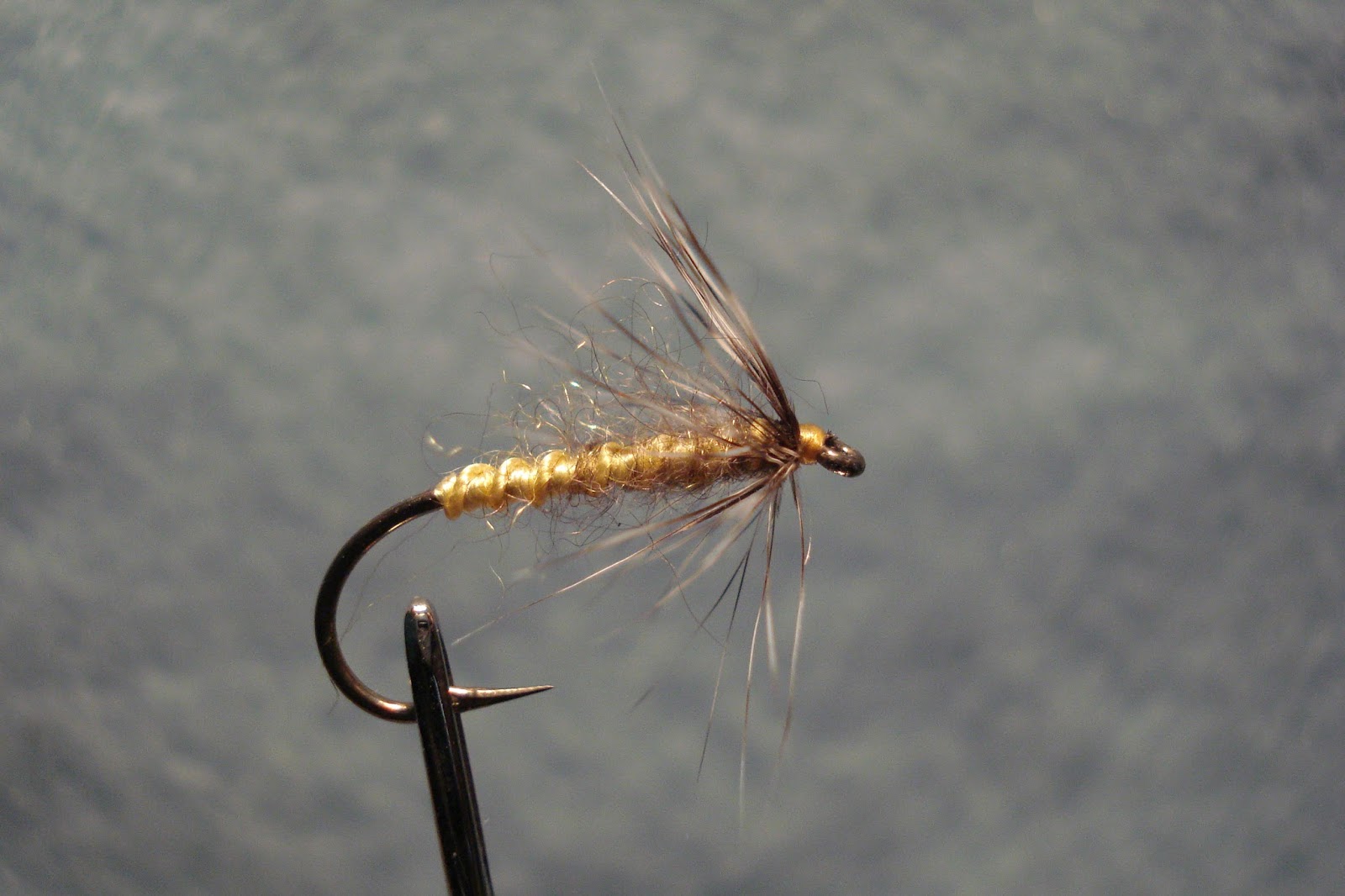
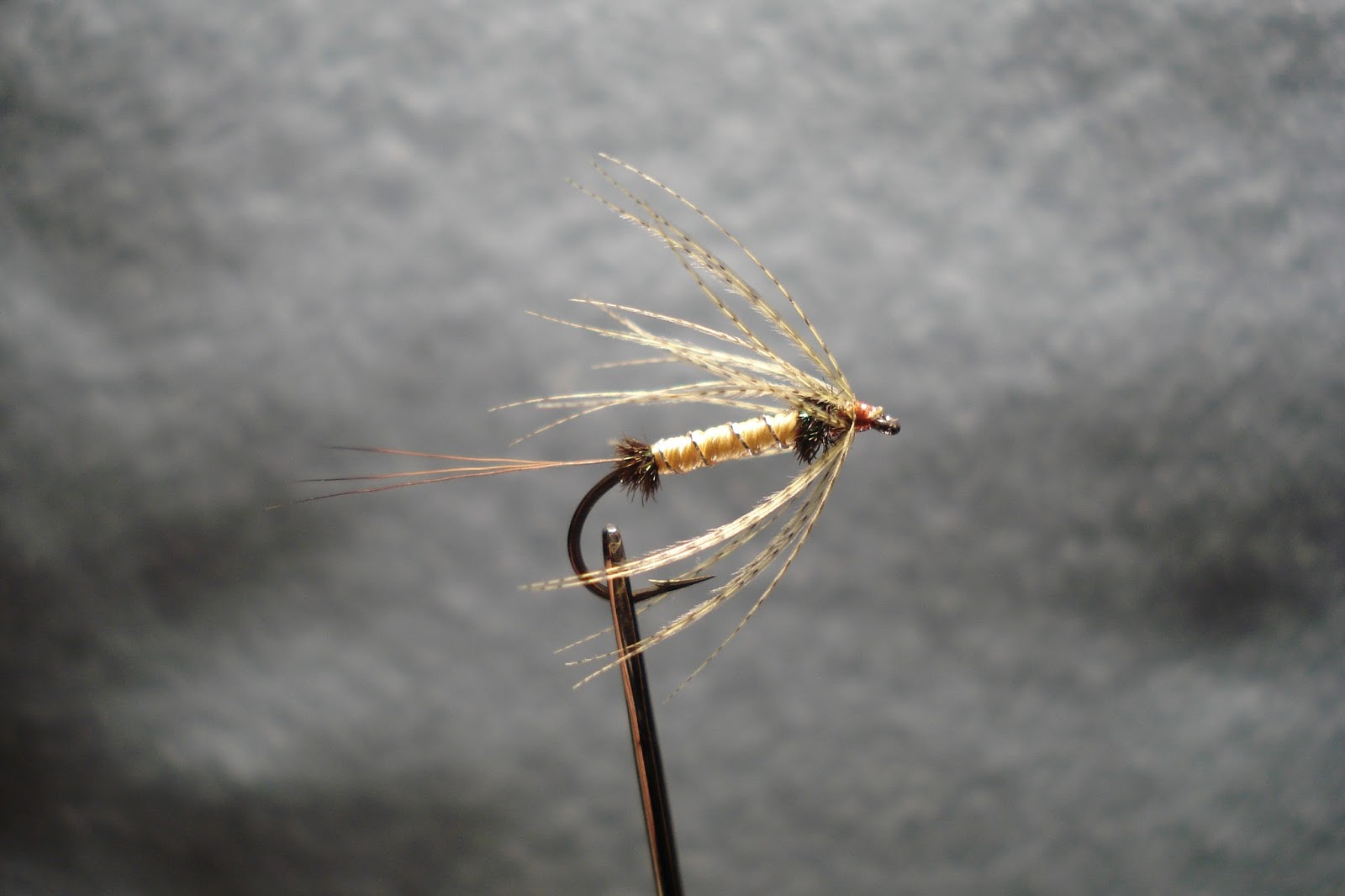
This dressing substitutes American woodcock undercovert for landrail undercovert. It is dressed more heavily to align it with William Blacker's Red Palmer Fly, which T. E. Pritt lists as a precedent. It finishes the fly in front of the head rather than behind it. 

Hook:

14-18
Thread:

Orange
Body:

Orange silk
Hackle:

American woodcock undercovert
Head:

Peacock herl


Two distinct strains of dressing the Thornfly Dun seem to exist. Drawing the connection between these two pattern groups makes two assumptions: first, that the name Thornfly (in whatever form) corresponding with a hatching period beginning in late May or early June correlates different representations; second, that these dressings are, as the name dun often seems to distinguish, caddis or sedge flies. The more popular dressings exhibit a general orange-red cast in the bodies, hackles, and heads. They have much in common with the Light Dun that Michael Theakston describes in his List of Natural Flies (1843). However, many of the dressings also emphasize a darker overall color, with purplish black bodies and darker dun-colored hackles. Dressings for this June hatch have more in common with the Silverhorns sedge that Alfred Ronalds lists for June fishing in The Fly-fisher’s Entomology (1837). 

In the former category is the Thornfly Dun, no. 49, that T. E. Pritt includes in Yorkshire Trout Flies (1885) and its 1886 reworking, North-Country Flies:

“Wings.—Hackled with a Landrail’s feather, taken from under the wing.
Body.—Orange silk.
Head.—Peacock herl.”

Pritt notes that the Thornfly Dun is “a very excellent fly in a good bold brown water on warm days in summer, from June onwards. It is a variation of No. 5 [the Brown Owl], and equally useful. Dressed with a redder feather it is the same fly as that known as Blacker’s Red.” After Pritt, Harfield Edmonds and Norman Lee seem to offer two variations on the Thornfly Dun for June sedge dressings. They recommend, like Pritt, their Dark and Light Sedges for fishing from the “middle of June to the end of the season.”

Despite the reference to Blacker, Pritt’s Thornfly Dun seems more aligned to manuscript dressings like Large Thorn Fly Dun recorded by Jonathan Pickard in 1820 and printed by Robert L. Smith in The North Country Fly: Yorkshire’s Soft Hackle Tradition (2015): “Orange silk, peacock harl in the head feather from the inside of a landrail’s wing.” Smith also prints another 1820 list by William Robinson with an almost identical dressing for the Thorn Dun Larger or Landrail Dun.


This dressing uses gold Pearsall’s gossamer silk, substitutes a mixture of ginger antron and orange acrylic for orange mohair, and applies gold twist rather than tinsel.


Pritt’s attribution to Blacker’s Red is presumably to the Red Palmer Fly that William Blacker includes in his Art of Angling (1843). The color scheme falls into the tawny category, essentially the same as Pritt’s Thornfly Dun, except that Blacker's fly is dressed as a palmer:

“Hook ff.—Body, Red or orange mohair, with gold twist or tinsel up the body.
Legs, Two red hackles, wound on from the tail up to the head, in rotation with the tinsel.”

Blacker’s Red Palmer is the same as the Red Palmer that John Kirkbride includes in his Northern Angler (1837), except that Kirkbride recommends occasionally using gold wire as a rib.


This dress of James Chetham's Thorn-Fly dresses a winged fly into a soft hackle, using dove covert for the light gray mallard's wing.  It uses a mixture of black antron and raw Black Welsh Mountain wool for lamb’s wool.


In the latter, darker category of Thornfly dressings is James Chetham’s Thorn-Fly. In his Angler’s Vade Mecum (1681), Cheatham includes “Another Catalogue, of Flies, practiced by a very good angler,” in addition to the list he reprints from The Complete Angler (1657, 1676), that includes the Thorn-fly as the first choice for May. Chetham’s dressing calls for a “Dubbing of Black Lambs Wooll, and Dub’d with Black Silk, Wings of a Mallards light Grey; Note that all the Feathers got from Mallards for Wings, ought be got from a wild Mallard, and not from a tame one.” Stephen Braithwaite maintained a manuscript fly list, which includes a Thorn Fly dressed like Chetham’s, that Robert L. Smith reprints.

Chetham’s early dressing seems to provide a precedent for the Alfred Ronalds’s Silverhorns a century and a half later. Ronalds notes that the Silverhorns “is extremely abundant upon some waters, and is well taken both by the Trout and Grayling until the end of August throughout the day, and principally in showery weather. The figure represents the female. The male has black horns.*

IMITATION.
Body. Black ostrich herl tied with black silk, and dressed off.
Wings. Feather from a wing of the cock blackbird.
Legs. Small black cock's hackle.
Horns. Grey feather of the mallard.

To make it buzz, the body is ribbed with silver twist upon the black ostrich herl, and a black hackle wrapped all down.

* There is a variety upon some waters, which has a very shining highly polished jet-black wing.”

Wednesday, June 7, 2017

Stone Fly; Stone Flye or Flie; and, the Montana Stonefly


This dressing of the Stone Fly that Richard Bowlker describes in The Art of Angling (1757) departs from the general rule of the blog and uses a size 10 hook instead of a size 14. It also substitutes a blend of beaver fur and golden stonefly antron dubbed on rib of silk buttonhole twist, which, when wet, would be an apt substitute for Bowlker's “body with dark brown mohair, mixed with dirty yellow.”

Hook:

6-10
Thread:

Wood Duck
Body:

Silk button hole twist – Belding-Corticelli 3715 bamboo, size D
Rib:

Silk button hole twist – Belding-Corticelli 3715 bamboo, size D dubbed with an equal blend of beaver fur and golden stonefly antron
Hackle:

Grizzly cock


In a discussion of stoneflies in his Fly Fishing: The North Country Tradition (1996), Leslie Magee suggests that “of all the flies imitated by the flyfisher, the larger stoneflies are the least familiar; few of the that I meet on the riverside have ever handled a ‘creeper’ (the nymph or larvae) or an adult stonefly,” and that bait fishing with the stonefly was more common. While the popularity of bait fishing with the stonefly has passed, Magee points out that it was still popular in T. E. Pritt’s time, “when fishing the live creeper and the adult stonefly cast upstream was all the rage on several North Country rivers.” Despite Magee's assertion that the popularity of bait fishing with stoneflies had waned by the early twentieth century, Harfield Edmonds and Norman Lee devoted a chapter to it in their Brook and River Trouting (1916); “20 years after the publication of Brook and River Trouting upstream fishing with the creeper and live stonefly was virtually extinct” due to developments in angling gear and fly fishing methods.

Nevertheless, historical angling authors give testament to Magee’s assertion that fishing stone flies as bait was a centuries old practice, much like fishing nymphal and mature Green Drakes. John Kirkbride, for instance, expresses this preference in his Northern Angler (1837): the Stone Fly, “on a hot day, is a most destructive bait for trout,” and it “is seldom used as an artificial fly; for it is best to dab with it after it takes wing. It is here called the May-fly.” Michael Theakston likewise notes in his List of Natural Flies (1843), that the stone fly, the “Imperial Empress of all trout flies,” is “in general fished natural.” “After sunset she comes out,” he notes, “for her enjoyments are chiefly in the dusk and twilight of night and early morn; the whole family are then in motion—flying about—running among the stones, and paddling upon the waters.” Theakston explains that, to fish the stone fly successfully, the angler must “move, unseen, with easy motion up the stream, and dab the fly with precision on the eddies behind stones, or other places of succour where the trout takes his station; or let it glide free and natural down the current over his likely haunts; never drag it against the stream (unnatural for any fly) or suffer it to drown; but succour and recover it by easy lifts and gentle jerks, to keep it on the water alive and dry, for a dead fly hanging at the hook like a piece of wet moss, will not be taken on the top.” Theakston regards fishing the stone fly as an artificial as “a true trier of skill, and probably the best test of the general merits of the flyfisher. Each rustic craftsman along the banks of the winding streams, where the true art and science of flyfishing is best known and practised, greet with glee the presence of the stone fly.”

In the third edition of his Modern Trout Fishing (1950), some twenty-five years after bait fishing the stonefly went extinct, in Magee’s account, Roger Woolley emphasized how often the stone fly is fished as a natural, noting that “it is more used in its natural state than as an artificial. It is called the Mayfly on the north country rivers, where it hatches out in great numbers.” Woolley points out that “it is not always easy to procure a sufficient number of the natural flies for a day’s fishing, and then the artificial has to be resorted to, but the stone fly anglers prefer the natural fly is procurable.” He goes on to list eighteen dressings for smaller stoneflies, including five soft hackles like the Winter Brown that he attributes to the North Country tradition.

Although Woolley’s dressings are almost evenly split between winged and corresponding hackled versions, historical stone flies patterns were most often winged dressings. John Jackson’s Practical Fly-Fisher (1854) includes a winged stone fly, no. 32, the May-Fly, but notes that the fly is “generally fished natural, being large enough to swim a good sized hook, or two smaller ones tied double.” Theakston’s dressing is also winged, as is the Stone Fly that William Blacker includes in his Art of Angling (1843). Kirkbride, Alfred Ronalds in The Fly-fisher’s Entomology (1837), and John Turton’s Angler’s Manual (1836) provide dressings that seem to derive from sixteenth- and seventeenth-century antecedents that John Waller Hills describes in A History of Fly Fishing for Trout (1921).

Hills lists the Stonefly as one of the twelve most important flies to anglers, giving a brief account of early dressings from Dame Julianna Berner’s A treatyse of fysshynge wyth an Angle (1496) to Charles Cotton’s 1676 additions to Izaak Walton’s Compleat Angler (1657). Hills points out that the Stonefly “has changed neither in name nor in dressing. It is quite unmistakeable, a fat, stupid, clumsy clown, better at running than flying. The Treatise is as follows: ‘The stone fly, the body of black wool and yellow under the wing and under the tail, and the wings of the drake.’ Markham as usual makes the dressing more definite: the yellow under wings and tail is to be made with yellow silk and the wings are of a drake's down, not the quill feather. Cotton knew the fly well and gives an excellent account of its history: he made the body of dun bear's hair and brown and yellow camlet well mixed, making your fly more yellow on the belly and towards the tail, two or three hairs of a black cat's beard for tail, and long, very large wings of grey mallard. Though we use different furs from Cotton, his body survives unchanged in essence: but a hen pheasant's quill feather makes a truer wing than light mallard, and we like to add a hackle, either blue dun or greenish. But the changes are immaterial.”

Part of the “excellent account” that Hills attributes to Cotton includes a description of the Stone-Flies’ unique manner of hatching and eagerness of the trout to feed on them: “This same Stone-Flie has not the patience to continue in his Crust, or Husk till his wings be full grown, but so soon as ever they begin to put out, that he feels himself strong (at which time we call him a Jack) squeezes himself out of Prison, and crawls to the top of some stone, where he can find a chink that will receive him, or can creep betwixt two stones, the one lying hollow upon the other (which, by the way, we also lay so purposely to find them) he there lurks tills his wings be full grown, and there is your only place to find him (and from thence doubtless he derives his name) though, for want of convenience, he will make shift with the hollow of a Bank, or any other place where the wind cannot come to fetch him off.” Cotton notes that anglers often “dape or dibble” the natural Stone-Flie, “as with the [Green] Drake” and that fishing the fly is “much better toward 8, 9, 10 or eleven of the clock, at which time also the best fish rise, and the latter the better, provided you can see your Flie, and when you cannot, a made Flie will murder.”

In his Fly Fisher’s Guide (1816), George Bainbridge nods toward three traditions of fishing the stone fly. Not only is it “a deadly bait, used in the natural state,” but it is dressed after the fashion of Cotton's and Berners' precedent, winged and with a bear fur body. Brainbridge notes that it is also dressed as a hackled pattern, with “a long-fibred grizzled hackle from a cock’s back, without wings.” This latter dressing specifically recalls the Stone Flies of Richard Bowlker and his son Charles. Richard Bowlker provides a simple, soft hackle dressing for the Stone Fly in his Art of Flyfishing (1757). He describes the insect as “a large four-winged fly; bred from an insect in the water, called the water cricket; to be found in stony, gravelly brooks, or rivers; his belly is of a dirty yellow, his wings of a fine blue color, full of small veins, so that he is best made with a fine blue grizzle cock’s hackle; the body with dark brown mohair mixed with a dirty yellow.” Charles Bowlker offers a similar dressing in his 1776 edition, though its description reads more like a palmer: “This fly is made of the brown feather of a hen. His belly is of a dirty yellow and his back of the dark brown. His body is made of a yellow or brown spaniel’s hair, or Mohair, with the grizzled hackle of a cock around it.”


Breaking with the usual size 14 hook size for the blog, this dressing uses a 4x bait hook. It substitutes a cree hackle for the brown and grizzly hackles Charles Brooks requires.


Stonefly dressings are the stock-in-trade of modern American anglers, though they are often involved dressings. A notable exception is Charles Brooks' Montana Stonefly nymph. Brooks famously dressed heavily-weighted nymphal patterns “in the round” for fishing deep, boulder-studded pocket water of the western trout streams he favored—much like the water Theakston and the Bowlkers reference—and he described his methods of fishing and dressing them in Nymph Fishing for Larger Trout (1976). Though it is a bit of a stretch, many, such as his Montana Stone Fly, are essentially soft hackles or flymphs, not far removed in form the Hare's Ear Flymph that Dave Hughes describes in Wet Flies (1995). This fly recalls the Bowlkers own dressing, though it is unlikely Brooks had access to their books. Brooks dressed his Montana Stone on long, heavy wire hooks in sizes 4 to 8 and weighted them heavily in order to represent the “Pteronarcys genus of stoneflies, especially P. californica,” also known as the Giant Salmon Fly Nymph, a must different stone fly than the one Alfred Ronalds describes: a fly hatching from “the beginning of April until the end of May,” of the “Order, Neuroptera. Family, PerlidÅ“. Genus, Perla. Species, Bicaudata.” Ronalds' stonefly is likely much more closely related to the fly Ernest Schwiebert describes in Nymphs (1973) as Perla Capitata, the Great Stonefly Nymph, Art Flick's Stonefly Creeper. Brooks’ Montana Stone is somewhat more complicated to dress than the Bowlkers:

“Tail: Six fibers of raven or crow primary.
Rib: Copper wire.
Body: Black fuzzy yarn, four strand.
Hackle: One grizzly saddle and one grizzly dyed dark brown. Strip hackles off lower hackles before tying in.
Gills: Light gray or white ostrich herls.
Thread: Black nymo 3/0.”

Brooks directs fly tiers to: “Tie in thread at front, wind to bend. Lacquer shank. Tie in tail fibers and split to form forked tail, three fibers per side. Tie in ribbing and yarn. Wind thread forward, half hitch twice, and break off. Lacquer shank again. Wind yarn to eye, back to bend, forward to eye and back to base of thorax. Tie off, tying in thread at same time. Wind rib and tie off. Tie in one strand of ostrich herl, and both hackles by the butts. Strip fibers off lower side of both hackles. Wind two separated turns of hackle, one at the base of the thorax and another halfway between there and the eye. Both colors of hackle should lie one against the other. Tie off. Wind ostrich herl forward at the base of the hackles, tie off. Spiral thread forward and finish head large and lacquer well.”

Wednesday, February 8, 2017

Smoky Mountain Blackbird; Crow Fly; or, Black Palmer

This dressing of the Smoky Mountain Blackbird is unweighted and uses the 2x dry fly hook in size 14 that other flies in this blog use. Also, following an almost identical dressing by Roger Lowe, the Crow Fly, it uses a starling primary for the palmer.

Hook:

4-10
Thread:

Black
Tail:

Starling primary barbules, tied the length of the hook shank
Body:

Peacock herl
Hackle:

Split starling primary


L. J. DeCuir includes the Smoky Mountain Blackbird in his Southeastern Flies (2001), noting the similarities between it and the better known Yallerhammer—it uses a peacock herl body and “utilizes the split wing feather of a bird.” DeCuir gives this dressing for the fly:

“Hook: Mustad 9672, TMC 5263 or 3x or 4x Streamer Hook #4-10
Thread: Black
Weight: ‘Lead’ wire [or lead substitute]
Tail: Barbules from the wing feather of a blackbird
Palmered Rib: Split wing feather of a blackbird
Body: Peacock herl”

While the Smoky Mountain Blackbird most resembles DeCuir’s tailless dressing of the Yallerhammer, “it can also be fished like a Woolly Bugger,” even though, as DeCuir notes, it is “usually fished in the mountains of the Southeast like most heavily weighted nymphs.”

The “blackbird” of DeCuir’s Smoky Mountain Blackbird does not specify a species like the distinctive Yallerhammer, despite their similarities, and there are nearly thirty species of blackbird in the Americas. Roger Lowe gives an almost identical dressing in his Fly Pattern Guide to the Great Smoky Mountains (2001), which he calls Crow Fly. He notes that it is “tied similar to the Yellow Hammer but with a Crow feather; imitates the molting stonefly.”

“Hook: 9671 Mustad
Thread: Black
Body: Black yarn or peacock herl
Hackle: Biot quill from Crow or Starling”


Similar tailless dressings exist, most often listed as a Black Palmer. John Turton’s includes a Black Palmer Fly in his Angler’s Manual (1836) for fishing in the latter part of the season, from “July to September.” He dresses it “with dark orange silk; wing, black hen’s hackle feather; body, copper-coloured peacock’s feather; after rains, ribbed with silver twist.”

Roger Woolley includes a Black Palmer in a later edition of Modern Trout Flies (1950) that does not list a thread color, as is usually the case with the flies on Woolley’s list, but includes the materials for dressing Turton’s “after rains” Black Palmer Fly, with a rib of silver wire rather than silver twist. It could easily be dressed with the dark orange thread Turton gives.

The name Black Palmer covers a variety of dressings, the black referring either to the hackle, as in Turton’s dressing, or the body, like the Black Palmers of Alfred Ronalds’ and Charles Bowlker’s. Both Ronald’s and Bowlker’s dressings, in The Fly-Fisher’s Entomology (1836) and The Art of Angling (1774) respectively, utilize a black ostrich body, silver twist, and either a black or red cock’s hackle palmer.

John Jackson’s Practical Fly Fisher (1853) includes a dressing for the black palmer that is much more variable (and includes a variation that is very similar to the Yallerhammer):

“Body.—Dark Peacock’s, or Ostrich’s herl, ribbed with gold tinsel and green silk.
Black, brown, or dark red Cock’s hackle over all.”

Wednesday, July 13, 2016

Waspe Flye; Wasp-flie; Wasp Fly; the Bee

This dressing substitutes a grizzly hackle for raptor hackle and assigns silk button hole twist for the ribbing, as well as the yellow tying thread for dressing the fly overall.
Hook:
10-14
Thread:
Yellow
Rib:
Silk buttonhole twist, Coat's & Clarks 223 yellow, size D
Body:
Raw Black Welsh Mountain wool
Hackle:
Dingy dun grizzle hackle

Flies tied to mimic bees are immediately recognizable date as far back as historical dressings like the Brown Hackle. Dressings of wasps and bees, like many terrestrial flies, tend more toward generalization than flies tied to represent water-born insects. However flawed the assumption might be, fly tiers seem to think trout will respond better to a strict representation of insects they see underwater all the time, but only need a suggestive pattern to represent terrestrials. Whereas dressings of the Small Ant or Black Ant focus on a pronounced thorax and abdomen, and beetle dressings like the Bracken Clock assign iridescent peacock herl to suggest wing cases and abdomens, wasp and bee dressings typically focus on two key traits, the insect's abdominal barring and its wing coloration. This focus has not changed much since the late middle ages. Dame Julianna Berner’s A treatyse of fysshynge wyth an Angle (1496), for instance, provides an early instance of such considerations: “The body of blacke wull & lappid abowte wt yellow thread: the winges of the bosarde.”

In Part II of The Compleat Angler (1676), Charles Cotton includes a very similar Wasp-flie as the third dressing for July: “We have likewise this month a Wasp-flie, made either of a black Cats tail, ribb’d about with yellow silk, and the wing of the grey feather of a Mallard.” Likewise, John Turton includes a hackled dressing of the Wasp Fly in his Angler’s Manual (1836), which he also dresses for July: “made with light brown silk: wing, starling’s underwing feather; body, brown bear’s   hair, ribbed with yellow silk.”

William Blacker includes a slightly different dressing for a Bee —the standard dressing, he claims, for all bee or wasp patterns—in The Art of Angling (1843):

“Body, Yellow tail, then brown, then black.
Legs, Black-red hackled, at the head.
Wings, Hen pheasant, or partridge wings.”

Despite including dressings for a variety of terrestrial categories in his List of Natural Flies (1843), Michael Theakston emphasizes other terrestrials - house flies, beetles, and ants. Alfred Ronalds, likewise, does not include a yellow and black barred bee in his Fly Fisher’s Entomology (1836), though both Theakston and Ronalds include an Orange Fly, dressed to imitate a small orange wasp.

In Favorite Flies and their Dressings (1892), Mary Orvis Marbury lists the Bee as no. 98. Its dressing includes the wings and familiar chenille body associated with the less imitative dressings of bee flies as attractor patterns. She notes that “imitations have been made of bees since early times with no special restriction as to material, so each maker has chosen his own.” Regarding the Bee dressing she includes, Marbury explains that it “was first made by C. F. Orvis in 1878, for use in streams west of the Mississippi River. The peculiar burnished effect of the upper feather of the wild turkey used for the wings, and the alternate rings of chenille which permitted a bulky, bee-like body without too much weight.” Granting the imperfections that always attend reproductions of color plates in historical texts, the Bee Marbury depicts on Plate M - Trout Flies has a chenille body of alternating olive and gold rather than brown or black and yellow. Paired with the brown "wild turkey" wings and the brown furnace hackle, the lightweight, "bulky" chenille body was probably less representative of a bee than a grasshopper in the large "streams west of the Mississippi."

In Wet Flies (1995 and 2015), Dave Hughes provides a dressing of a classic winged wet fly, the McGinty, which seems related to Marbury’s dressing of the Bee:

“Hook: 2x stout, size 10-14.
Thread: Black 6/0 or 8/0 nylon.
Hackle: Brown hen.
Tail: Scarlet red hackle fibers under teal flank fibers.
Body: Yellow and black chenille, wound together.
Wings: White-tipped mallard secondary wing quills.”

Wednesday, June 29, 2016

Sand Fly


This dressing of Michael Theakston's Sand Fly configures the fly as a hackle and opts for the "yellow bronze brown hen" hackle over the three other alternatives Theakston provides.

Hook:

10-18
Thread:

Orange
Body:

Orange Pearsall's gossamer silk dubbed sparsely with muskrat
Hackle:

Lightly specked, bronzy-yellow hen


Sand Fly is the name some historical anglers use to identify the Gravel Bed Spider, but it most often refers to a caddisfly or sedge. Leslie Magee notes dressings sedges or caddisflies listed specifically as the Sandfly, Sand Fly, or Sanded Dun in six different angling texts from 1809 to 1916, including George Bainbridge’s The Fly-fisher’s Guide (1816), Alfred Ronalds’ The Fly-fisher’s Entomology (1836), and Michael Theakston’s A List of Natural Flies (1853). Robert L. Smith lists no fewer than ten dressings explicitly named Sand Fly (or an approximate dialectal variation, like Sandflee) in manuscripts and publications dating from 1712 to the twentieth in his North Country Fly: Yorkshire's Soft Hackle Tradition (2015), available from Coch-y-Bonddu Books.

Theakston gives a dressing for the Sanded Dun—“dun” is his denomination for sedge or caddis—that uses “bright copper colored silk for body; feathers, for wings and legs, from the landrail, throstle, or a yellow bronze brown hen, or the brown owl, with or without a tinge of water rat.”

Bainbridge provides a winged and hackled dressing for the Sand Fly, asserting that it “may be considered as one of the best flies for affording diversion,” since it can be fished “successfully, at all hours of the day, from April to the end of September.” He compares the flies fished on “the borders of Yorkshire, where, as well in Cumberland and Westmoreland, the snipe’s wing and golden plover’s feathers, dressed as hackles, without dubbed bodies are the favourite flies.” Presumably, he means silk bodied dressings. Bainbridge notes that, while such silk bodied flies will work, a dubbed bodied fly will often work better, recalling a afternoon when his dubbed bodied Sand Fly caught twice as many fish as its silk bodied counterpart. For the winged dressing, the “wings are made from the sandy-coloured feather of the landrail’s wing, with a ginger hackled for legs; and the bright sandy-coloured fur from the hare’s neck, mixed with a very small quantity of orange-coloured mohair, for the body; or if dressed as a hackle, the feathers from under the throstle’s wing are the nearestthe colour of the wings of the fly.”

Ronalds cites Bainbridge’s description of the Sand Fly and its dressings, adding a “silk of the same colour” as the “sandy coloured fur from the hare’s neck.” He leaves off the orange mohair that Bainbridge recommends. Ronalds also stipulates that the Sand Fly is dressed “buzz,” as a hackle, with a throstle’s undercovert, but he notes that the hackle should be “wound upon the above body.” 

In North Country Flies (1886), T. E. Pritt includes the Sandfly, No. 34, which is an almost exact replica of the winged wets Bainbridge and Ronalds list, except that he ribs a sandy body with sandy hare’s fur. John Jackson, likewise, includes a Sand Fly, No. 19 in his Practical Fly-Fisher (1854) that alternates hen pheasant undercovert for the winging, but maintains the body and hackling; E. M. Tod includes this dressing in Table I of the Appendix of his Wet-Fly Fishing (1903).

In Modern Trout Fly Dressing (1936), Roger Woolley includes a Sand Fly under the heading of General Wet Flies:

Body.—Ginger fur.
Hackle.—Ginger hen.
Wings.—Starling.

Wednesday, May 18, 2016

Turkey Brown; Little Brown Dun; Little Dark Brown

This dressing follows Alfred Ronalds’ suggestion for dressing the Turkey Brown “buzz,” as a hackled rather than a winged fly.
Hook:

12-16
Thread:

Purple
Tail:

Red hackle, matching as closely as possible the grouse hackle
Rib:

Purple Pearsall’s gossamer silk
Body:

Embroidery thread - DMC 938 dark coffee brown
Hackle:

Grouse covert


Alfred Ronalds includes the Turkey Fly or Little Brown Dun as No. 22 in his Fly-Fisher’s Entomology (1836) to imitate a May mayfly: “Order, Neuroptera. Family, Ephemeridæ. Genus, Ephemera.”

“It is to be used on cold days ; is a very good fly upon some waters ; and is in season from about the time that the March Brown becomes scarce until the end of June.*

IMITATION.
BODY.  Dark brown floss silk ribbed with purple silk thread.
TAIL.  A whisk or two of a red cock's hackle, stained as for the legs.
WINGS. Tip of the brownest feather from a partridge's tail, or, if well selected, a feather may be found on the back of the partridge.
LEGS.  Red cock's hackle stained a good brown with copperas.

To make it buzz, a feather from the Grouse may be tied on, in the manner shown in the imitation of the Green Drake, No. 28.

* A fly is found upon some waters, similar in every respect to the above, except that the wings partake of the colour of the Iron-blue. The Little-dark-Spinner, No. 23., answers for its metamorphosis”

Although it seems like a stretch, T. E. Pritt correlates his No. 32, the Orange Partridge or Little Brown Dun in North-Country Flies (1886), Turkey Fly, which suggests other precedents to and heirs of Ronalds’ dressing, like the Brown Watchet. 

This dressing substitutes split silk buttonhole twist – Belding-Corticelli 8545 purple, size D, for violet camlet and uses beaver as a “dark brown dubbing.” It uses a mourning dove covert for the hackle and purple silk for the body and head.


Even more speculative is the possible connection between the Turkey Brown and a Restoration-era dressing, the Little Dark Brown. In his Anglers Vade Mecum (1681), James Chetham reprints the list of flies that Charles Cotton added as the second part (1676) of Izaak Walton’s Compleat Angler (1653). Both authors list the Little Dark Brown as the second fly for April and dress the “little dark brown, the dubbing of that colour, and some violet Camlet mixt, and the wing of the grey feather of the Mallard.” It's name, dirty purplish body, and emergence suggest a possible connection between this dress and Ronalds' Turkey Brown. They also suggest a distant connection to the Small Dark Dun Spider. 


Wednesday, April 6, 2016

Green Drake

This dressing of Michael Theakston’s Green Drake departs from the general rule of the blog and uses a size 10 hook instead of a size 14. It also substitutes silk buttonhole twist for smooth wool, and a rib of the same twist dubbed with antron a shade darker, and it dresses his lightly-winged pattern as a hackle.
Hook:

6-12
Thread:

Yellow
Body:

Silk button hole twist – Belding-Corticelli 9040 lettuce, size D, tied in behind the eye of the hook and wound back toward the bend
Rib:

Body silk tightly twisted, dubbed with medium olive antron, and back wound forward toward the eye
Hackle:

Green Drake dyed mallard flank


The Green Drake is likely the most popular and most famous mayfly in historical angling texts. It is at the very least the mayfly that angling authors most anticipate. In their versions of The Art of Angling (1758, 1774), Richard Bowlker and his son Charles refer to the fly alternately as the May Fly, Yellow Cadow, or Green Drake, and both note the trout’s enthusiasm for the fly when it is on the water. 

Roger Woolley treats the Green Drake under its own heading in the third edition of his Modern Trout Flies (1950), noting that the "Mayfly (Green Drake) is the largest of the Ephemerdiæ family of flies, and much importance is attached to its appearance on the streams by anglers, for the reason that because of its size and the numbers in which it usually hatches out, it forms an annual feast for the trout, a time when all trout (and especially the very bigs ones that rarely rise to the smaller flies) are on the move, and at times rise madly. The sight of practically all the trout in the stream rising well at the same time has given the impression that the trout’s ‘silly season’ is the duffer’s opportunity to make larger captures. This will not be found to be always or even often the case."

In his List of Natural Flies (1853), Michael Theakston gives a simple dressing for the Green Drake, the sixty-second fly he lists for fishing in the course of the year and the eighteenth for the month of May alone. He recommends that it should be "hackled, for legs and wings with, a light coloured mottled feather from the wild mallard, that is stained the ground color of the wings," which he describes in the natural as a "light grass green with dim transparency." He calls for a body of a "pale yellow-green smooth woolen thread, warpt with eight or nine rounds of darker shade." He makes no mention of a tail.  Like many angling authors, Theakston cannot resist sharing stories of fishing the hatch, recalling a June morning in particular when a deft neighborhood angler Miles Shepherd swore off fishing the Green Drake hatch – "I reckon ‘nowt’ of your green drakes!" – because of fishing an unsuccessful dressing by John Stubbs, another fly tier whose dressings, in Theakston's estimation, "are bad to equal."

Charles Cotton recalls the success and frustration he had with his Green Drake on a seventeenth-century trip to the river, "in a Cloudy day, after a showr, and in a whistling wind": "five and thirty very great Trouts, and Graylings betwixt five, and eight of the Clock in the Evening and had no less than five, or six Flies with three good hairs apiece taken from me in despite of my heart, besides." He lists the Green Drake as his favorite of the four large flies that hatch in May in his additions to the Compleat Angler (1676), alongside the "little Yellow May-fly."

Like Theakston’s dressing, this fly uses a size 10 hook, and it substitutes primose silk button hole twist – Coats and Clark’s 72-A baby yellow, size D – for the floss silk that Alfred Ronalds prescribes, as well as using dark deer hair in place of rabbit whiskers for the tailing.


In his Fly-Fisher’s Entomology (1836), Alfred Ronald’s gives a description of the Green Drake and suitable dressings, and he indulges in no recollections of days astream fishing the Green Drake hatch. Many anglers do, incorporating it into their observations of the hatching. Ronalds, as always, takes a scientific bent more familiar to modern anglers. First, he notes that the Green Drake is also known as the “May Fly” or “Cadow” classes it “ Order, Neuroptera. Family, Ephemeridæ. Genus, Ephemera. Species, Vulgata.”

“This fly, proceeding from a water nympha, lives three or four days as shown ; then the female changes to the Grey Drake (No. 29.), and the male to the Black Drake (see p. 89.). The Green Drake cannot be said to be in season quite three weeks on an average. Its season depends greatly upon the state of the weather; and it will be found earlier upon the slowly running parts of the stream (such as mill dams) than on the rapid places.

IMITATION.
BODY.  The middle part is of pale straw coloured floss silk, ribbed with silver twist. The extremities are of a brown peacock's herl, tied with light brown silk thread.
TAIL.  Three rabbit's whiskers.
WINGS AND LEGS.  Made buzz from a mottled feather of the mallard, stained olive. (See Dyes, Chap. II. p. 35. article 4.)

To make it with wings in their state of rest, part of a feather similarly stained must be used, and a pale brown Bittern's hackle, or in case of need, a partridge feather must be wrapped round the same body under the wings.”

Historical anglers have often felt it worth noting that the Green Drake is  large enough to fish as bait, suggesting how to best bait a hook alongside accounts of how an artificial fly might best be dressed. In his Angler’s Manual (1836) John Turton notes that the Green Drake "takes the best of fish: it is very often used in its natural state. In their season, these flies come off in such quantities, that a stranger would be astonished: boys can gather small drake baskets full of these baits in a very short time: these they sell to gentlemen to fish with." In the Practical Angler (1857), on the other hand, W. C. Stewart notes that the Green Drake is as hard to catch as the fish and "hardly deserves recognition." (For better bait fishing, he recommends clumsy stoneflies instead.)