Showing posts with label Magee. Show all posts

Wednesday, June 7, 2017

Stone Fly; Stone Flye or Flie; and, the Montana Stonefly


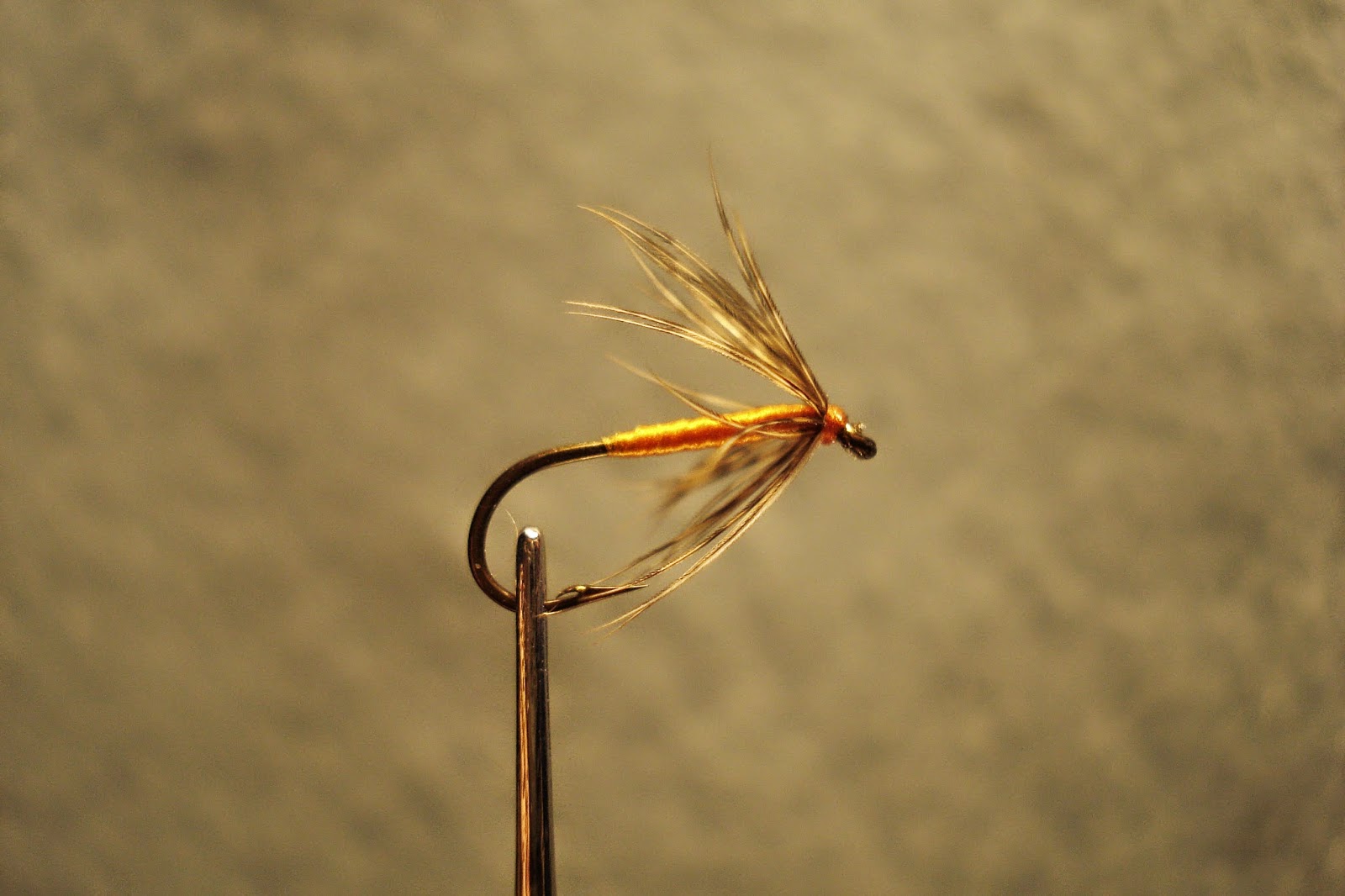
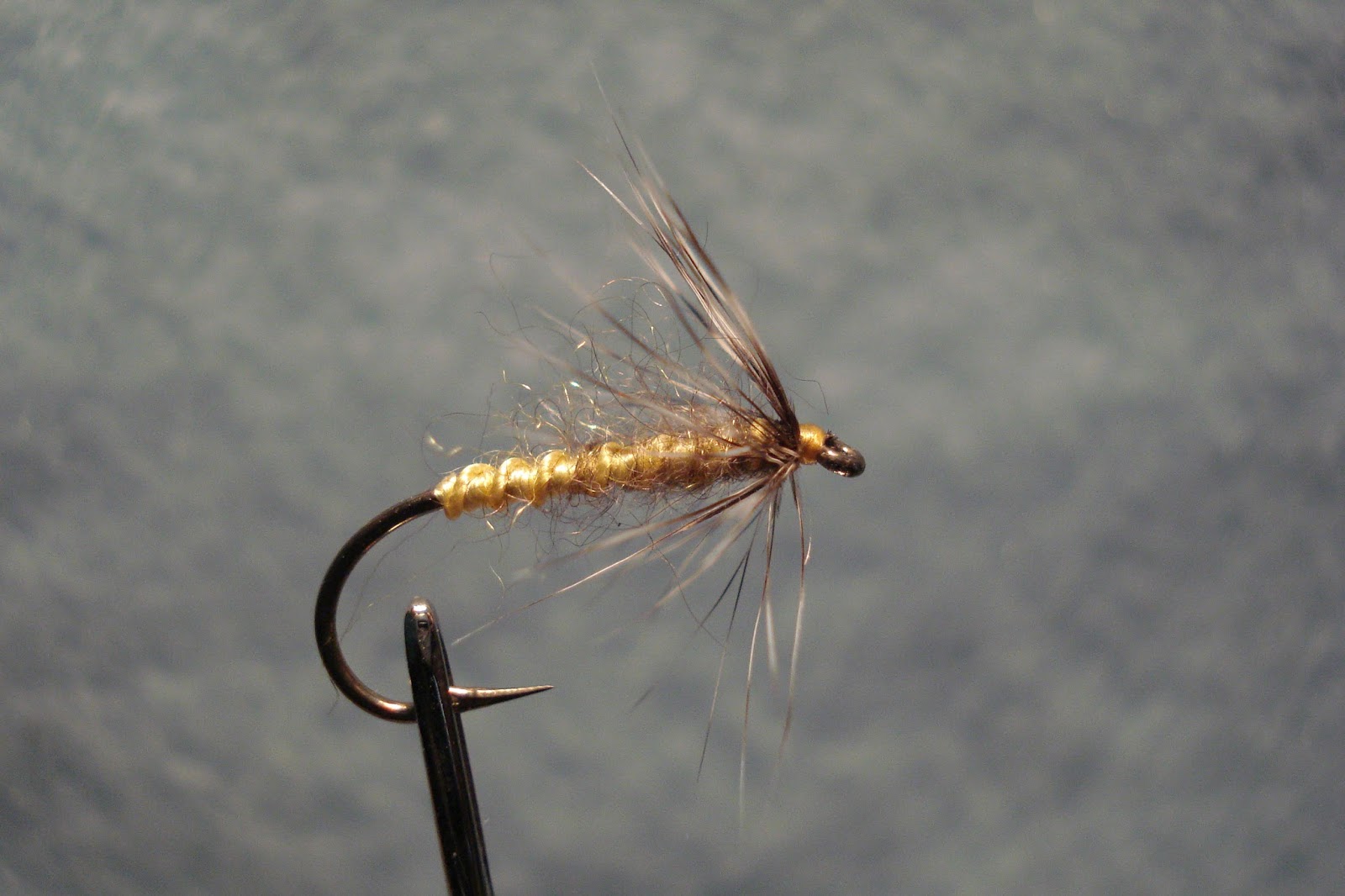
This dressing of the Stone Fly that Richard Bowlker describes in The Art of Angling (1757) departs from the general rule of the blog and uses a size 10 hook instead of a size 14. It also substitutes a blend of beaver fur and golden stonefly antron dubbed on rib of silk buttonhole twist, which, when wet, would be an apt substitute for Bowlker's “body with dark brown mohair, mixed with dirty yellow.”

Hook:

6-10
Thread:

Wood Duck
Body:

Silk button hole twist – Belding-Corticelli 3715 bamboo, size D
Rib:

Silk button hole twist – Belding-Corticelli 3715 bamboo, size D dubbed with an equal blend of beaver fur and golden stonefly antron
Hackle:

Grizzly cock


In a discussion of stoneflies in his Fly Fishing: The North Country Tradition (1996), Leslie Magee suggests that “of all the flies imitated by the flyfisher, the larger stoneflies are the least familiar; few of the that I meet on the riverside have ever handled a ‘creeper’ (the nymph or larvae) or an adult stonefly,” and that bait fishing with the stonefly was more common. While the popularity of bait fishing with the stonefly has passed, Magee points out that it was still popular in T. E. Pritt’s time, “when fishing the live creeper and the adult stonefly cast upstream was all the rage on several North Country rivers.” Despite Magee's assertion that the popularity of bait fishing with stoneflies had waned by the early twentieth century, Harfield Edmonds and Norman Lee devoted a chapter to it in their Brook and River Trouting (1916); “20 years after the publication of Brook and River Trouting upstream fishing with the creeper and live stonefly was virtually extinct” due to developments in angling gear and fly fishing methods.

Nevertheless, historical angling authors give testament to Magee’s assertion that fishing stone flies as bait was a centuries old practice, much like fishing nymphal and mature Green Drakes. John Kirkbride, for instance, expresses this preference in his Northern Angler (1837): the Stone Fly, “on a hot day, is a most destructive bait for trout,” and it “is seldom used as an artificial fly; for it is best to dab with it after it takes wing. It is here called the May-fly.” Michael Theakston likewise notes in his List of Natural Flies (1843), that the stone fly, the “Imperial Empress of all trout flies,” is “in general fished natural.” “After sunset she comes out,” he notes, “for her enjoyments are chiefly in the dusk and twilight of night and early morn; the whole family are then in motion—flying about—running among the stones, and paddling upon the waters.” Theakston explains that, to fish the stone fly successfully, the angler must “move, unseen, with easy motion up the stream, and dab the fly with precision on the eddies behind stones, or other places of succour where the trout takes his station; or let it glide free and natural down the current over his likely haunts; never drag it against the stream (unnatural for any fly) or suffer it to drown; but succour and recover it by easy lifts and gentle jerks, to keep it on the water alive and dry, for a dead fly hanging at the hook like a piece of wet moss, will not be taken on the top.” Theakston regards fishing the stone fly as an artificial as “a true trier of skill, and probably the best test of the general merits of the flyfisher. Each rustic craftsman along the banks of the winding streams, where the true art and science of flyfishing is best known and practised, greet with glee the presence of the stone fly.”

In the third edition of his Modern Trout Fishing (1950), some twenty-five years after bait fishing the stonefly went extinct, in Magee’s account, Roger Woolley emphasized how often the stone fly is fished as a natural, noting that “it is more used in its natural state than as an artificial. It is called the Mayfly on the north country rivers, where it hatches out in great numbers.” Woolley points out that “it is not always easy to procure a sufficient number of the natural flies for a day’s fishing, and then the artificial has to be resorted to, but the stone fly anglers prefer the natural fly is procurable.” He goes on to list eighteen dressings for smaller stoneflies, including five soft hackles like the Winter Brown that he attributes to the North Country tradition.

Although Woolley’s dressings are almost evenly split between winged and corresponding hackled versions, historical stone flies patterns were most often winged dressings. John Jackson’s Practical Fly-Fisher (1854) includes a winged stone fly, no. 32, the May-Fly, but notes that the fly is “generally fished natural, being large enough to swim a good sized hook, or two smaller ones tied double.” Theakston’s dressing is also winged, as is the Stone Fly that William Blacker includes in his Art of Angling (1843). Kirkbride, Alfred Ronalds in The Fly-fisher’s Entomology (1837), and John Turton’s Angler’s Manual (1836) provide dressings that seem to derive from sixteenth- and seventeenth-century antecedents that John Waller Hills describes in A History of Fly Fishing for Trout (1921).

Hills lists the Stonefly as one of the twelve most important flies to anglers, giving a brief account of early dressings from Dame Julianna Berner’s A treatyse of fysshynge wyth an Angle (1496) to Charles Cotton’s 1676 additions to Izaak Walton’s Compleat Angler (1657). Hills points out that the Stonefly “has changed neither in name nor in dressing. It is quite unmistakeable, a fat, stupid, clumsy clown, better at running than flying. The Treatise is as follows: ‘The stone fly, the body of black wool and yellow under the wing and under the tail, and the wings of the drake.’ Markham as usual makes the dressing more definite: the yellow under wings and tail is to be made with yellow silk and the wings are of a drake's down, not the quill feather. Cotton knew the fly well and gives an excellent account of its history: he made the body of dun bear's hair and brown and yellow camlet well mixed, making your fly more yellow on the belly and towards the tail, two or three hairs of a black cat's beard for tail, and long, very large wings of grey mallard. Though we use different furs from Cotton, his body survives unchanged in essence: but a hen pheasant's quill feather makes a truer wing than light mallard, and we like to add a hackle, either blue dun or greenish. But the changes are immaterial.”

Part of the “excellent account” that Hills attributes to Cotton includes a description of the Stone-Flies’ unique manner of hatching and eagerness of the trout to feed on them: “This same Stone-Flie has not the patience to continue in his Crust, or Husk till his wings be full grown, but so soon as ever they begin to put out, that he feels himself strong (at which time we call him a Jack) squeezes himself out of Prison, and crawls to the top of some stone, where he can find a chink that will receive him, or can creep betwixt two stones, the one lying hollow upon the other (which, by the way, we also lay so purposely to find them) he there lurks tills his wings be full grown, and there is your only place to find him (and from thence doubtless he derives his name) though, for want of convenience, he will make shift with the hollow of a Bank, or any other place where the wind cannot come to fetch him off.” Cotton notes that anglers often “dape or dibble” the natural Stone-Flie, “as with the [Green] Drake” and that fishing the fly is “much better toward 8, 9, 10 or eleven of the clock, at which time also the best fish rise, and the latter the better, provided you can see your Flie, and when you cannot, a made Flie will murder.”

In his Fly Fisher’s Guide (1816), George Bainbridge nods toward three traditions of fishing the stone fly. Not only is it “a deadly bait, used in the natural state,” but it is dressed after the fashion of Cotton's and Berners' precedent, winged and with a bear fur body. Brainbridge notes that it is also dressed as a hackled pattern, with “a long-fibred grizzled hackle from a cock’s back, without wings.” This latter dressing specifically recalls the Stone Flies of Richard Bowlker and his son Charles. Richard Bowlker provides a simple, soft hackle dressing for the Stone Fly in his Art of Flyfishing (1757). He describes the insect as “a large four-winged fly; bred from an insect in the water, called the water cricket; to be found in stony, gravelly brooks, or rivers; his belly is of a dirty yellow, his wings of a fine blue color, full of small veins, so that he is best made with a fine blue grizzle cock’s hackle; the body with dark brown mohair mixed with a dirty yellow.” Charles Bowlker offers a similar dressing in his 1776 edition, though its description reads more like a palmer: “This fly is made of the brown feather of a hen. His belly is of a dirty yellow and his back of the dark brown. His body is made of a yellow or brown spaniel’s hair, or Mohair, with the grizzled hackle of a cock around it.”


Breaking with the usual size 14 hook size for the blog, this dressing uses a 4x bait hook. It substitutes a cree hackle for the brown and grizzly hackles Charles Brooks requires.


Stonefly dressings are the stock-in-trade of modern American anglers, though they are often involved dressings. A notable exception is Charles Brooks' Montana Stonefly nymph. Brooks famously dressed heavily-weighted nymphal patterns “in the round” for fishing deep, boulder-studded pocket water of the western trout streams he favored—much like the water Theakston and the Bowlkers reference—and he described his methods of fishing and dressing them in Nymph Fishing for Larger Trout (1976). Though it is a bit of a stretch, many, such as his Montana Stone Fly, are essentially soft hackles or flymphs, not far removed in form the Hare's Ear Flymph that Dave Hughes describes in Wet Flies (1995). This fly recalls the Bowlkers own dressing, though it is unlikely Brooks had access to their books. Brooks dressed his Montana Stone on long, heavy wire hooks in sizes 4 to 8 and weighted them heavily in order to represent the “Pteronarcys genus of stoneflies, especially P. californica,” also known as the Giant Salmon Fly Nymph, a must different stone fly than the one Alfred Ronalds describes: a fly hatching from “the beginning of April until the end of May,” of the “Order, Neuroptera. Family, Perlidœ. Genus, Perla. Species, Bicaudata.” Ronalds' stonefly is likely much more closely related to the fly Ernest Schwiebert describes in Nymphs (1973) as Perla Capitata, the Great Stonefly Nymph, Art Flick's Stonefly Creeper. Brooks’ Montana Stone is somewhat more complicated to dress than the Bowlkers:

“Tail: Six fibers of raven or crow primary.
Rib: Copper wire.
Body: Black fuzzy yarn, four strand.
Hackle: One grizzly saddle and one grizzly dyed dark brown. Strip hackles off lower hackles before tying in.
Gills: Light gray or white ostrich herls.
Thread: Black nymo 3/0.”

Brooks directs fly tiers to: “Tie in thread at front, wind to bend. Lacquer shank. Tie in tail fibers and split to form forked tail, three fibers per side. Tie in ribbing and yarn. Wind thread forward, half hitch twice, and break off. Lacquer shank again. Wind yarn to eye, back to bend, forward to eye and back to base of thorax. Tie off, tying in thread at same time. Wind rib and tie off. Tie in one strand of ostrich herl, and both hackles by the butts. Strip fibers off lower side of both hackles. Wind two separated turns of hackle, one at the base of the thorax and another halfway between there and the eye. Both colors of hackle should lie one against the other. Tie off. Wind ostrich herl forward at the base of the hackles, tie off. Spiral thread forward and finish head large and lacquer well.”

Wednesday, March 22, 2017

Cumberland; or, Crimson Partridge


Hook:

12-18
Thread:

Red Pearsall’s gossamer silk
Body:

Tying silk
Hackle:

Medium partridge


In his treatment of Hills’s A Summer on the Test (1924) in Two Centuries of Soft-Hackled Flies (2004), Nemes cites Hills’s passing comment on the pattern: “One of the softest, most compressible, patterns is the partridge hackle, and, whether this be the reason or not, I consider it the best sunk fly on the Test. Its body, of silk, can be of many colours. I find the old Cumberland pattern, the orange partridge, best, and next to that the red.” By Nemes's account, anglers  on the Test seemingly drew little distinction between the red and orange bodies, although the Partridge and Orange has endured as a more distinct, popular fly for generations of anglers.

In The Soft-Hackled Fly Addict (1981), Sylvester Nemes names the Cumberland, a fly which John Waller Hills seemingly only mentions in passing. Nemes notes that “Hills believed this fly to be the most effective sunk fly on the Test, particularly on hot days and in slow water,” and he provides this dressing for Hills’s fly:

Body: Red or orange silk floss
Hackle: Medium partridge
Rib: Narrow gold wire

Dressed with a rib, the Cumberland becomes the Orange Partridge that Harfield Norman and Edmond Lee list in their Brook and River Trouting (1916). In his River Keeper (1934), which Nemes also notes, Hills recalls a similar, ribbed pattern favored by the riverkeeper William Lunn, the Red Partridge Hackle.

In list of his thirty North Country flies, included at the head of Fly Fishing: The North Country Tradition (1994), Leslie Magee attributes the dressing, the Crimson Partridge, to an unnamed 1887 publication by James Blades. Robert L. Smith includes the Crimson Partridge, one of James Blades’ patterns “taken from T K Wilson’s angling articles in the Dalesman magazine of 1949,” in an appendix at the end of his The North Country Fly: Yorkshire’s Soft Hackle Tradition (2015). He additionally notes that the Crimson Partridge is a “splendid fly in a full brown water from the beginning of the season to the end.” Many of the manuscript and publications that Smith includes list the fly less as a dressing for hot days and slow water, like Hills, and more of a dressing for discolored water.

Wednesday, June 29, 2016

Sand Fly


This dressing of Michael Theakston's Sand Fly configures the fly as a hackle and opts for the "yellow bronze brown hen" hackle over the three other alternatives Theakston provides.

Hook:

10-18
Thread:

Orange
Body:

Orange Pearsall's gossamer silk dubbed sparsely with muskrat
Hackle:

Lightly specked, bronzy-yellow hen


Sand Fly is the name some historical anglers use to identify the Gravel Bed Spider, but it most often refers to a caddisfly or sedge. Leslie Magee notes dressings sedges or caddisflies listed specifically as the Sandfly, Sand Fly, or Sanded Dun in six different angling texts from 1809 to 1916, including George Bainbridge’s The Fly-fisher’s Guide (1816), Alfred Ronalds’ The Fly-fisher’s Entomology (1836), and Michael Theakston’s A List of Natural Flies (1853). Robert L. Smith lists no fewer than ten dressings explicitly named Sand Fly (or an approximate dialectal variation, like Sandflee) in manuscripts and publications dating from 1712 to the twentieth in his North Country Fly: Yorkshire's Soft Hackle Tradition (2015), available from Coch-y-Bonddu Books.

Theakston gives a dressing for the Sanded Dun—“dun” is his denomination for sedge or caddis—that uses “bright copper colored silk for body; feathers, for wings and legs, from the landrail, throstle, or a yellow bronze brown hen, or the brown owl, with or without a tinge of water rat.”

Bainbridge provides a winged and hackled dressing for the Sand Fly, asserting that it “may be considered as one of the best flies for affording diversion,” since it can be fished “successfully, at all hours of the day, from April to the end of September.” He compares the flies fished on “the borders of Yorkshire, where, as well in Cumberland and Westmoreland, the snipe’s wing and golden plover’s feathers, dressed as hackles, without dubbed bodies are the favourite flies.” Presumably, he means silk bodied dressings. Bainbridge notes that, while such silk bodied flies will work, a dubbed bodied fly will often work better, recalling a afternoon when his dubbed bodied Sand Fly caught twice as many fish as its silk bodied counterpart. For the winged dressing, the “wings are made from the sandy-coloured feather of the landrail’s wing, with a ginger hackled for legs; and the bright sandy-coloured fur from the hare’s neck, mixed with a very small quantity of orange-coloured mohair, for the body; or if dressed as a hackle, the feathers from under the throstle’s wing are the nearestthe colour of the wings of the fly.”

Ronalds cites Bainbridge’s description of the Sand Fly and its dressings, adding a “silk of the same colour” as the “sandy coloured fur from the hare’s neck.” He leaves off the orange mohair that Bainbridge recommends. Ronalds also stipulates that the Sand Fly is dressed “buzz,” as a hackle, with a throstle’s undercovert, but he notes that the hackle should be “wound upon the above body.” 

In North Country Flies (1886), T. E. Pritt includes the Sandfly, No. 34, which is an almost exact replica of the winged wets Bainbridge and Ronalds list, except that he ribs a sandy body with sandy hare’s fur. John Jackson, likewise, includes a Sand Fly, No. 19 in his Practical Fly-Fisher (1854) that alternates hen pheasant undercovert for the winging, but maintains the body and hackling; E. M. Tod includes this dressing in Table I of the Appendix of his Wet-Fly Fishing (1903).

In Modern Trout Fly Dressing (1936), Roger Woolley includes a Sand Fly under the heading of General Wet Flies:

Body.—Ginger fur.
Hackle.—Ginger hen.
Wings.—Starling.

Wednesday, February 10, 2016

Hackled Deul Cruik

This dressing substitutes red-brown fur from a rabbit’s neck for the “brown fox’s ear” in the original dressing, following the cue from a similar dressing in Sylvester Lister’s later manuscript. It also uses an American woodcock covert in place of an English woodcock covert.
Thread:

Orange
Body:

Yellow and orange Pearsall's gossamer silk wound up the shank alongside each other and dubbed with red-brown rabbit's neck fur
Hackle:

Woodcock covert


Robert L. Smith’s recently published The North Country Fly: Yorkshire’s Soft Hackle Tradition (2015), available at from Coch-y-Bonddu Books, highlights manuscripts and largely forgetten fly fishing publications dating back to the mid-eighteenth century. He cites “The Wharfe Dale List” from Joseph Wells’ Contemplative and Practical Angler (1842), which includes a Hackled and Winged Deul Cruik. The Hackled dressing is dressed with “Wings outside of woodcock’s wing, yellow and orange silk, brown fox’s ear for body.”  Smith notes that the Deul Cruik is includes in six additional texts. In other texts, its shows up under different names, like the Great Brown Deel Crook in William Lister’s manuscript (1712), the Deel Cruik in James Pickard’s manuscript (1794), and the Devil’s Crook (Hackle) in Stephen Braithwaite’s list (early eighteenth century).

In his 1820 manuscript, Jonathan Pickard’s list notes that the Dule Crook is another name for the March Brown. The Hackled Deul Cruik almost identical to the dressing that Sylvester Lister includes in his manuscript (1898) for the March Brown or Drake. Like Smith, Leslie Magee includes the manuscript in his Fly Fishing: The North Country Tradition (1994). Lister’s March Brown or Drake is dressed with a “feather reddish speckled from a partridge tail or outside woodcock wing. Head, yellow silk, body orange and yellow silk twisted and dubbed with reddish fur from fox’s ear or rabbit’s neck. Remarks Appears about April 1st. Good killer until beginning of May.” Unlike many the dressings and lists Smith includes, Braithwaite's manuscript list gives separate dressings for the March Brown and Devil Crook (Hackle): the former is dressed with a buddy of "cinnamon silk dubbed with fur orbrown bear"; the latter, with "ash-coloured silk dubbed with a little fur from for a hare's ear."

(Using alternating, side-by-side wraps of silk dubbed with fur is noteworthy body for the effect it creates, but it is by no means unique. The Little Dark Watchet that T. E. Pritt dressed used orange and purple wraps of silk dubbed with muskrat.)

Wednesday, December 16, 2015

Fern Fly or Woodcock and Orange; or, Soldier Fly

This dressing of Richard Bowlker’s Fern Fly uses an American woodcock primary for the hackle.

Hook:


14-18
Thread:

Burnt orange
Body:

Orange Pearsall’s marabou silk, lightly waxed
Hackle:

Woodcock covert


Leslie Magee traces the recurrence of popular dressings in North Country angling literature as well as the coterie publication of various North Country angling clubs from 1651—1885 in his Fly Fishing: the North Country Tradition (1994). He locates the Fern Fly or Woodcock and Orange in at least eight angling texts:  in Charles Cotton’s 1676 additions to Izaak Walton’s Compleat Angler; James Chetham’s Angler’s Vade Mecum (1681), John Williamson’s British Angler (1740); in R. Brooks (1793); John Swarbrick’s List of Wharefdale Flies (1807); George Bainbridge’s Fly-fisher’s Guide (1816); Michael Theakston’s List of Natural Flies (1853); and William Brumfitt’s manuscript (1885).

In a book that Magee does not include, Alfred Ronalds' Fly-Fisher’s Entomology (1836), the Fern Fly is listed as a terrestrial, also known as the Soldier Fly. Ronalds also gives a winged dressing and, as is his wont, a buzz or hackle dressing, a furnace palmer or heavily dressed front hackle on an orange silk body. John Jackson, whose dressings Magee also excludes provides directions for a winged Soldier Fly in his Practical Fly-Fisher (1854), as does Theakston. Neither of these dressings uses woodcock as winging or primary hackle - few of the Fern Fly dressings that Magee indicates use woodcock or orange at all.

Oddly enough, Magee does not locate the Fern Fly in either of the Bowlkers’ editions of The Art of Angling. In the 1753 edition, Richard Bowlker suggests dressing the fly for mid-June through mid-July, and his dressing is the one that gives it the name Woodcock and Orange: “He is a four-winged fly; his body very slender and of an orange colour; he is to be fished with at any time of the day, from sun-rise till sunset, being a very killing fly: His wings are made with a woodcock’s feather, his body with orange-coloured silk.” His dressing seems to be a direct precedent for the Brown Fern Fly that John Kirkbride included The Northern Angler (1837), which only added a small dubbing ball thorax of hare's neck fur behind the hackle. 


This dressing of Charles Bowlker’s Fern Fly uses turkey tail for the body, American woodcock primaries for a hackle, and orange Pearsall’s gossamer silk twisted as a ribbing.


Richard’s son Charles dresses the Fern Fly in his 1774 edition of The Art of Angling. He is not as convinced of its efficacy as his father: "The Fern Fly comes in about the latter end of June, and does not continue above a week. He has four wings that stand upright on his back. His wings and body are made of a woodcock’s feather, ribbed with orange coloured silk. He is to be fished with in a morning, the first of any fly, till abot eleven o’clock, and then you may change your fly according to the brightness or dullness of the day, for there are many flies on the water at that time."


Wednesday, October 21, 2015

Dark Snipe and Orange; or, Dark Snipe


Hook:

14-18
Thread:

Burnt orange
Body:

Orange Pearsall’s gossamer silk
Hackle:

Snipe covert


In his Fly Fishing: The North Country Tradition (1994), Leslie Magee notes that “T. E. Pritt will always be remembered for his dressing of the Dark Snipe (Snipe and Purple); a fly which is likely to be found on the majority of fly casts in the first few weeks of the trout season.” 

While Pritt often gets credit for the dressing, Magee suggests that an earlier manuscript precedent exists. William Brumfitt, whose illustrations Pritt copied directly for the color plates in Yorkshire Trout Flies (1885), listed two dressings for the Dark Snipe. In addition to the purple-bodied dressing Pritt listed, Brumfitt also favored an orange-bodied dressing of the the simple, effective Dark Snipe:

"Body; Orange silk
Wing; Hackled with the feather from outside snipe’s wing."

In the comprehensive catalog of trout flies that Roger Woolley includes at the close of his Modern Trout Fly Dressing, third edition (1950), the Snipe and Orange is no. 115 and it follows Brumfitt's dressing almost to the letter. 

Wednesday, September 23, 2015

Bracken Clock; or, Brechan Clock


Hook:

10-16
Thread:

Red
Body:

Peacock herl on red silk or twisted with tying thread
Hackle:

A cock pheasant’s neck feather


In Fly Fishing: The North Country Tradition (1994), Leslie Magee includes a dressing for the Bracken Clock among his list of thirty preferred patterns that he attributes to a 1875 manuscript drafted  by William Brumfitt. T. E. Pritt reproduced Bumfitt's manuscript in the hand-colored plates of his Yorkshire Trout Flies (1885) and the subsequent North Country Flies (1886). Brumfitt's dressing of the Bracken Clock is the standard dressing - little variation exists between the dressings of various angling authors. Roger Woolley's Bracken Clock, in the third edition of Modern Trout Fly Dressing (1950), is an exact match. 

Like the Coch-y-Bonddu, Starling and Herl, and (perhaps) the Black Snipe, and the more modern Eric's Beetle, the Bracken Clock is a beetle or "clock" imitation. 

John Kirkbride describes what is, perhaps, a surprisingly modern dressing of the Bracken Clock, his Brechan Clock, in his Northern Angler (1837). He notes first that “the artificial brechan clock is seldom used, as the angler is generally more successful with the natural one.” Kirkbride describes baiting the hook with two beetles threaded face-to-face on the shank. But he dresses the artificial using “peacock with black ostrich harle for the body, and a black hackle for the legs, and the red feather of the partridge tail for wings; or, it may be made of a fine brown feather from the cock-pheasant’s breast, with a little tip of starling’s wing-feather at the tail, to represent the underwings. The red or upper feather must, of course, be tied down at the head and tail, to give it the appearance of a beetle. The body must be made full, as above-described, with a black hackle for legs.” What Kirkbride understands as winging - and he is technically correct, considering the placement of a beetle's wings - he dresses it like an angler today would dress a fly's shellback 

Wednesday, August 26, 2015

Grey Dun Midge; or, Grey Midge

This dressing substitutes an American woodcock covert for English woodcock undercoverts.
Hook:

16-18
Thread:

Primrose
Body:

Primrose Pearsall’s gossamer silk
Hackle:

Woodcock covert
Head:

Peacock herl


In The Angler’s Manual (1836), John Turton includes a September dressing, No. 67 the Grey Dun Midge, a hackle “made with yellow silk: wing, light woodcock’s feather under wing; body, yellow silk; head, green peacock. On some days, the outside wing feather of the dotterill is used for the wing.”

The Grey Midge, no. 24, is one of the few hackled flies that John Jackson includes in his posthumous work The Practical Fly-Fisher (1854). He dresses it with a "feather from a Woodcock's breast, wrapped on a body of pale yellow silk."

Leslie Magee reprints three lists of flies in Fly Fishing: The North Country Tradition (1994) that include a similar dressing. The first, John Swarbrick’s “List of Wharfedale Flies” (1807), includes No. 20, the Grey Midge: “This Fly is very Small a Hackle The Feather is Taken from the Wood cock Brest or one of the Small feathers from under the Wood Cock Wing Harld at the Head with Magpie Tayl feather.”   A similar, simpler pattern is included on William Nelson’s list in Magee’s book, the Light Woodcock, dressed the same as Swarbrick’s, minus the herl head. Sylvester Lister's 1898 manuscript called for a "freckled feather from a snipe rump. Head, magpie herl, body yellow silk, with a little fur from a water rat spun on," and Lister notes that the Grey Midge "comes on about middle of April, often of an evening."

In "another CATALOGUE" of flies in the Angler's Vade Mecum (1681) that James Chetham appended to his reproduction of  Charles Cotton's Compleat Angler (1676), the Grey Midge, or Gnat is a fly for June, "Dubbing of the Down of a sad Grey Cat, or sad Grey Camels Hair, Dub'd with Grey Silk, Wings of the Grey feather of a Mallard." Although it shares the same name, it meant for June and likely represents a different insect.

Wednesday, August 12, 2015

August Brown; or, August Dun


Hook:

12-16
Thread:

Tan
Rib:

Silk buttonhole twist – Coats & Clark’s lemon 223, size D
Body:

Tan tying thread dubbed with hare’s mask
Hackle:

Red grouse shoulder


In Two Centuries of Soft-Hackled Flies (2004), Sylvester Nemes includes some of the flies Francis M. Walbran listed in his column “Monthly Notes on North-Country Trout Flies” in The Fishing Gazette. For August 15, 1885, Walbran listed the August Brown first: “Body: Light brown silk, dubbed sparingly with hare’s face, and ribbed with yellow silk, dressed hacklewise with grouse’s feather.”

In Fly Fishing: The North Country Tradition (1994), Leslie Magee notes that the August Brown hatch is an autumn corollary to the springtime March Brown and that its name is interchangeable with the August Dun or Drake, the Autumn Dun, Cinnamon Fly (which hatches alongside a Cinnamon Sedge), and the Whirling Blue Dun. He includes Sylvester Lister's 's manuscript, which gives a September dressing, the "Cinnamon or August Drake," which he dressed with a "feather from under landrail's wing. Head, peacock's herl, body, orange with gold tinsel or covered with herl from cock pheasant's tail feather," noting that the fly is "very abundant on some Yorkshire rivers." 

Harfield Edmonds and Norman Lee included a winged August Dun in Brook and River Trouting (1916) which they recommend through the “last week in July, August and September." E. M. Tod also has a winged dressing in Wet Fly Fishing Treated Methodically (1903) for fishing in September. A winged August Brown, No. 47, is  in John Jackson’s Practical Fly-Fisher (1854), as well, a fly that he regards “equally as good in its season as the March Brown, which it very much resembles, though lightered coloured and smaller.”

In his Fly-Fisher’s Entomology (1836), Alfred Ronalds lists a winged and a hackled dressing for the August Dun No. 38:

“BODY.  Brown floss silk ribbed with yellow silk thread.
TAIL.  Two rabbit’s whiskers.
WINGS.  Feather of a brown hen’s wing.
LEGS.  Plain red hackled stained brown.

It is made buzz with a grouse hackle wound upon the above body.”

Wednesday, June 3, 2015

Marlow Buzz; Cocce Bundy; but, more regularly, Coch-y-Bonddu, etc.

This version of the Coch-y-Bonddu follows Alfred Ronald's directions for the Marlow Buzz and John Kirkbride's Welsh Cocce Bundy.
Hook:

16-20
Thread:

Black
Body:

Peacock herl
Hackle:

Red furnace (cochy-bondu), palmered with one hackle and dressed with another at the front


Like many soft-hackled flies, the Coch-y-Bonddu takes its name from its hackle, a soft poultry hackle in this instance, which is spelled differently by various authors. The name is of Welsh origin meaning the “Red and Black Stem.” In Welsh coch means “red” and y means “the,” while bonddu or “bôn+ddu” means, literally, “stem black” or “black stem.” Coch-y-bonddu, the “Red and Black Stem,” is an apt name for fly dressed with a red furnace hackle.

Jim Leisenring defines the term furnace hackle in The Art of Fishing the Wet Fly & Tying the Flymph (1941): a furnace hackle “has a very dark, black, or blue dun list next to the stem and on the tips of the fibers. In between the dark list and tips is a good color, usually red, yellow, white, or silver. The hackles which show these three distinct markings are known as furnace hackles and the name, such as Red Furnace or Cochy-bondu, Yellow Furnace, etc., is determined by the color between the dark list and tips.” In modern usage, “furnace” is often a misnomer applied to any poultry hackle with a dark center and a reddish-brown color that extends from the list to the tip.

In the Fly-Fisher's Entomology (1836), Alfred Ronalds lumped similar patterns under the Marlow Buzz dressing - the Coch-a-Bonddu, the Hazel Fly, and the Shorn Fly. Unlike other authors, dresses the fly as a palmer. Likewise, in the Northern Angler (1837), John Kirkbride  describes the Coch-y-Bonddu or Cocce Bundy as a palmer in relation to the Peacock Palmer, a fly dressed with "a body of copper-coloured peacock harle, ribbed with gold thread, and two fine red hackles, black at the butt." He notes, however, that "this palmer, made with a black-listed red hackle, very full, without any gold, is called the cocce bundy, and kills well in Wales."

In Fly Fishing: The North Country Tradition (1994), Leslie Magee discusses the Coch-y-Bonddu under the beetle heading, noting “many representation of beetles or ‘clocks’ in the old North Country lists,” counting thirteen patterns listed among prominent, nineteenth-century North Country angling authors, Micheal Theakston comprising almost half with his List of Naturals (1853). Magee includes the Coch-y-Bonddu in the list, but does not attribute it to an originator or author. He notes that of the thirteen flies he cites, only the Smoke Fly and Coch-y-Bonddu are still in regular, contemporary use, its popularity with anglers and trout largely undiminished. Other beetle or "clock" imitations include the Bracken Clock, Starling and Herl, and (perhaps) the Black Snipe, and the more modern Eric's Beetle. Imitations of this class or terrestrial outpace those of other terrestrials like the small ant or black ant. 

Datus Proper’s color plates depict an almost perfectly spherical body of peacock herl with a short loft and with a deep red, long coch-y-bondhu hackle that slopes back over the body and curves around the sphere.


Roger Woolley includes the Cochy-bondhu in the third edition of his Modern Fly Dressing (1932):

“This is a very small flying beetle that is in season and often very abundant in the warm June weather. The imitation is a favourite with many anglers, and is used more less throughout the season—and kills fish, too.

Body.—Bronze peacock herl tipped with flat gold.
Hackle.—Cochy-bondhu cock, a red hackle with black center and tips.”

In What the Trout Said (1982), Datus Proper related a modern experience with the traditional Coch-y-Bondhu on Falling Springs Branch in Pennsylvania. He regarded it as the “most imitative fly in existence" and confessed that he "had doubted its effectiveness, because I had not seen an American fisherman using it. The models I saw in shops were big, with anemic bodies and bushy hackles. Nothing like a beetle,” so his “new flies were tied with the natural insects as a model. They had come from a trout’s stomach, and they floated unhappily in a small white plastic box full of water.”

The body was more difficult [than determining the hook size—modern 20]. Three peacock herls spun around a waxed black thread would be strong, but they were still not as thick as the natural beetle’s body. A couple of attempts showed me how to pile them on so that they would stay put. The body was now as thick as it was long, and strong enough to pass on to my grandchildren—in case there were still any trout in Pennsylvania then.

My hackle was the traditional color: shiny, dark red, with a black center and tips. But I only used three turns, with the shiny outside of the hackle facing outward. The hackle was the smallest a coch-y-bondhu roost has to offer—with a width hardly created than the thickness of the body.

My pattern, then, was as described in books for decades, but the design was like no fly I had actually seen. (For all I know, every angler in Wales has one.) It looked ridiculously small and plump, with an undernourished hackle—like a fat lady in a miniskirt. No wonder dealers sell no such flies. But when I put mine in the plate of water with the defunct beetles, the fat lady was also a fat beetle.

Evidently the trout agreed with me. One of life’s little miracles is the way in which a primitive, three-year-old, cold blooded creature like a brown trout can detect a tiny difference in a fly. May you never change, Mr. Trout. Damn their pollution, concrete, dredges, and silt. Life without you would be a dull business.”