Showing posts with label Swarbrick. Show all posts

Wednesday, December 16, 2015

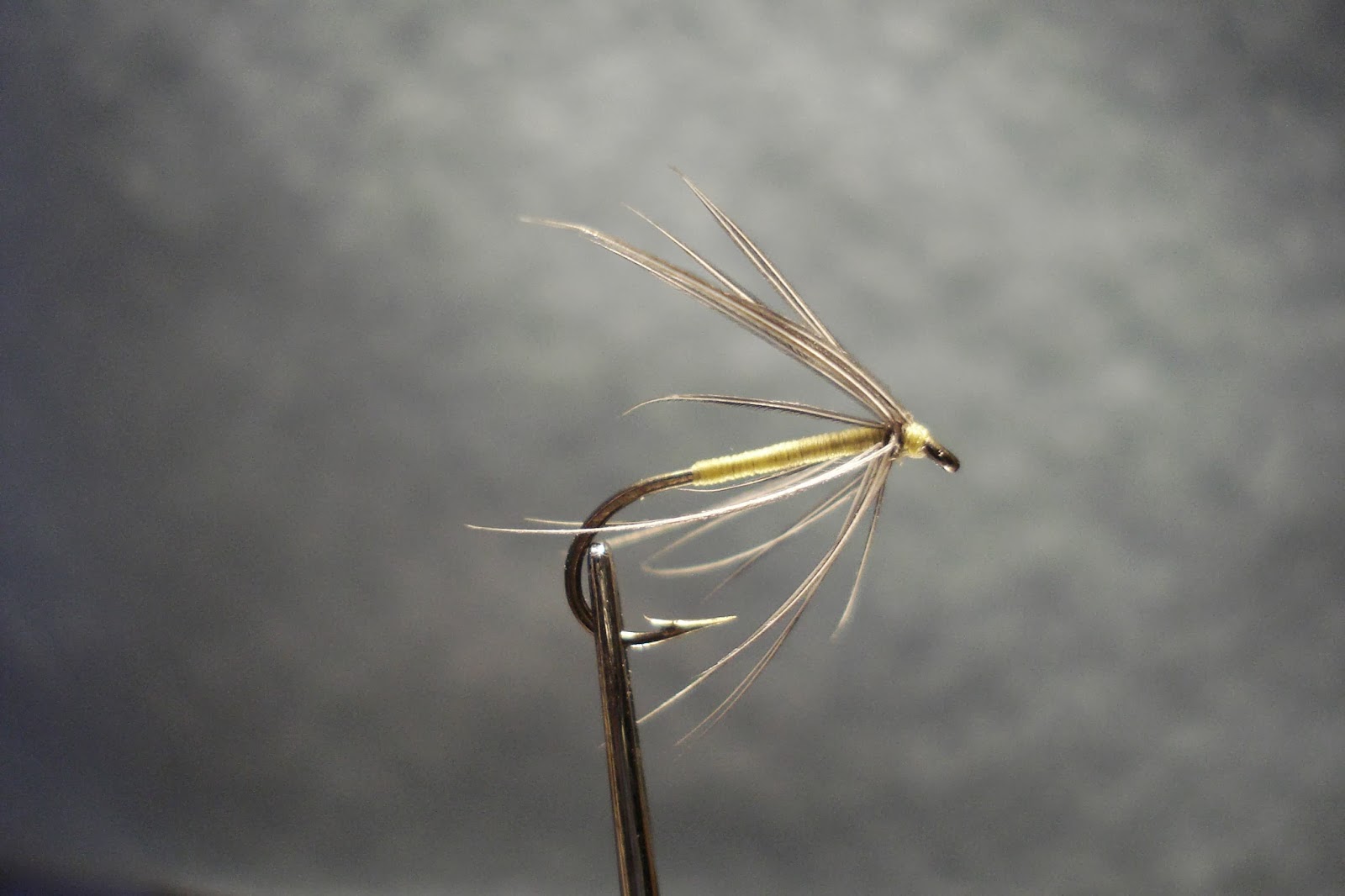
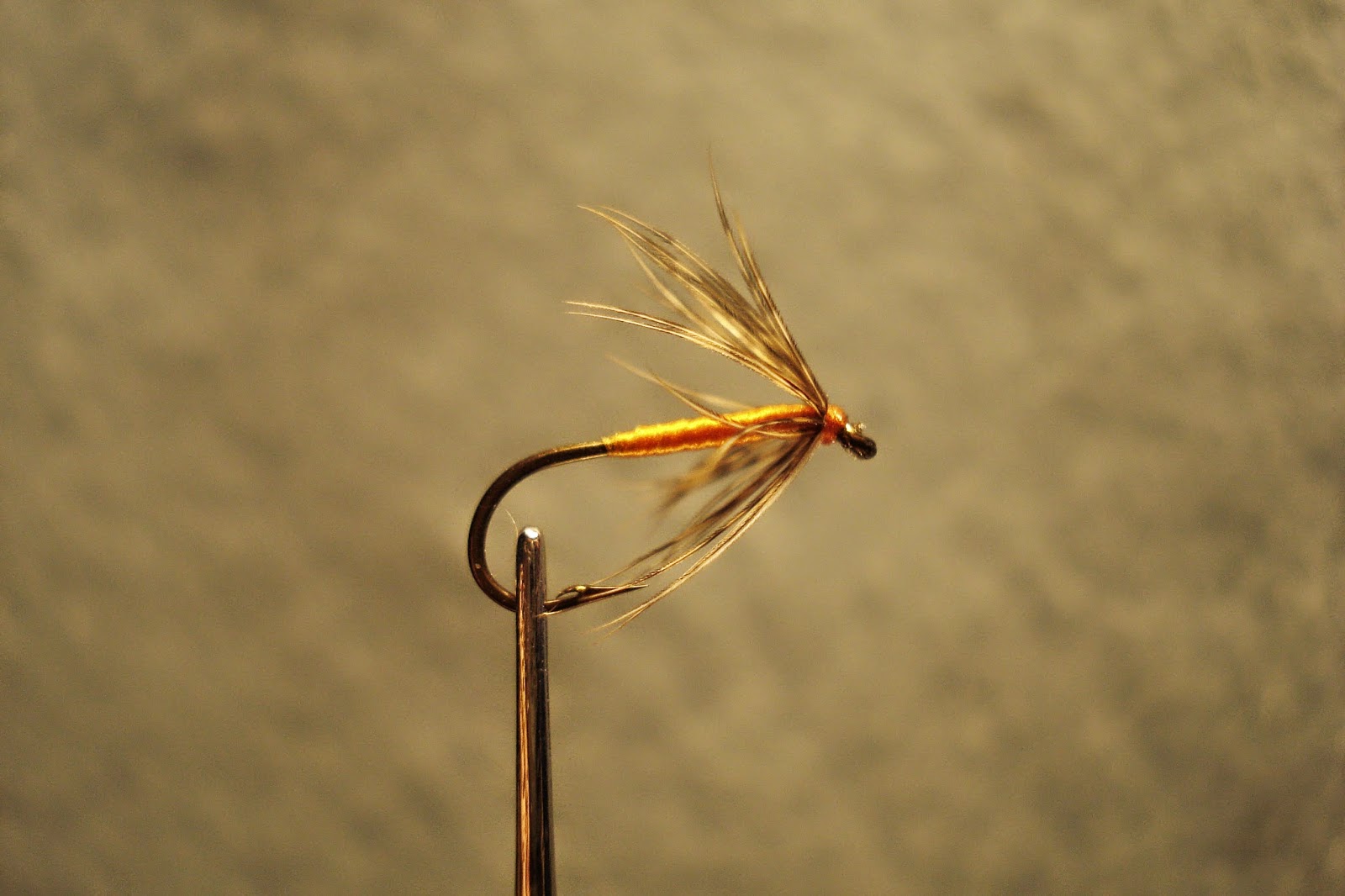
Fern Fly or Woodcock and Orange; or, Soldier Fly

This dressing of Richard Bowlker’s Fern Fly uses an American woodcock primary for the hackle.

Hook:


14-18
Thread:

Burnt orange
Body:

Orange Pearsall’s marabou silk, lightly waxed
Hackle:

Woodcock covert


Leslie Magee traces the recurrence of popular dressings in North Country angling literature as well as the coterie publication of various North Country angling clubs from 1651—1885 in his Fly Fishing: the North Country Tradition (1994). He locates the Fern Fly or Woodcock and Orange in at least eight angling texts:  in Charles Cotton’s 1676 additions to Izaak Walton’s Compleat Angler; James Chetham’s Angler’s Vade Mecum (1681), John Williamson’s British Angler (1740); in R. Brooks (1793); John Swarbrick’s List of Wharefdale Flies (1807); George Bainbridge’s Fly-fisher’s Guide (1816); Michael Theakston’s List of Natural Flies (1853); and William Brumfitt’s manuscript (1885).

In a book that Magee does not include, Alfred Ronalds' Fly-Fisher’s Entomology (1836), the Fern Fly is listed as a terrestrial, also known as the Soldier Fly. Ronalds also gives a winged dressing and, as is his wont, a buzz or hackle dressing, a furnace palmer or heavily dressed front hackle on an orange silk body. John Jackson, whose dressings Magee also excludes provides directions for a winged Soldier Fly in his Practical Fly-Fisher (1854), as does Theakston. Neither of these dressings uses woodcock as winging or primary hackle - few of the Fern Fly dressings that Magee indicates use woodcock or orange at all.

Oddly enough, Magee does not locate the Fern Fly in either of the Bowlkers’ editions of The Art of Angling. In the 1753 edition, Richard Bowlker suggests dressing the fly for mid-June through mid-July, and his dressing is the one that gives it the name Woodcock and Orange: “He is a four-winged fly; his body very slender and of an orange colour; he is to be fished with at any time of the day, from sun-rise till sunset, being a very killing fly: His wings are made with a woodcock’s feather, his body with orange-coloured silk.” His dressing seems to be a direct precedent for the Brown Fern Fly that John Kirkbride included The Northern Angler (1837), which only added a small dubbing ball thorax of hare's neck fur behind the hackle. 


This dressing of Charles Bowlker’s Fern Fly uses turkey tail for the body, American woodcock primaries for a hackle, and orange Pearsall’s gossamer silk twisted as a ribbing.


Richard’s son Charles dresses the Fern Fly in his 1774 edition of The Art of Angling. He is not as convinced of its efficacy as his father: "The Fern Fly comes in about the latter end of June, and does not continue above a week. He has four wings that stand upright on his back. His wings and body are made of a woodcock’s feather, ribbed with orange coloured silk. He is to be fished with in a morning, the first of any fly, till abot eleven o’clock, and then you may change your fly according to the brightness or dullness of the day, for there are many flies on the water at that time."


Wednesday, August 26, 2015

Grey Dun Midge; or, Grey Midge

This dressing substitutes an American woodcock covert for English woodcock undercoverts.
Hook:

16-18
Thread:

Primrose
Body:

Primrose Pearsall’s gossamer silk
Hackle:

Woodcock covert
Head:

Peacock herl


In The Angler’s Manual (1836), John Turton includes a September dressing, No. 67 the Grey Dun Midge, a hackle “made with yellow silk: wing, light woodcock’s feather under wing; body, yellow silk; head, green peacock. On some days, the outside wing feather of the dotterill is used for the wing.”

The Grey Midge, no. 24, is one of the few hackled flies that John Jackson includes in his posthumous work The Practical Fly-Fisher (1854). He dresses it with a "feather from a Woodcock's breast, wrapped on a body of pale yellow silk."

Leslie Magee reprints three lists of flies in Fly Fishing: The North Country Tradition (1994) that include a similar dressing. The first, John Swarbrick’s “List of Wharfedale Flies” (1807), includes No. 20, the Grey Midge: “This Fly is very Small a Hackle The Feather is Taken from the Wood cock Brest or one of the Small feathers from under the Wood Cock Wing Harld at the Head with Magpie Tayl feather.”   A similar, simpler pattern is included on William Nelson’s list in Magee’s book, the Light Woodcock, dressed the same as Swarbrick’s, minus the herl head. Sylvester Lister's 1898 manuscript called for a "freckled feather from a snipe rump. Head, magpie herl, body yellow silk, with a little fur from a water rat spun on," and Lister notes that the Grey Midge "comes on about middle of April, often of an evening."

In "another CATALOGUE" of flies in the Angler's Vade Mecum (1681) that James Chetham appended to his reproduction of  Charles Cotton's Compleat Angler (1676), the Grey Midge, or Gnat is a fly for June, "Dubbing of the Down of a sad Grey Cat, or sad Grey Camels Hair, Dub'd with Grey Silk, Wings of the Grey feather of a Mallard." Although it shares the same name, it meant for June and likely represents a different insect.

Wednesday, March 11, 2015

Blue Partridge


Hook:

14-18
Thread:

Blue
Body:

Raw wool - New Zealand Romney, dubbed thinly on blue tying thread, heavier behind the hackle
Hackle:

Partridge


As a point of terminology, flies named Blue Partridge, Gravel Spinner, Spider Fly, Gravel Bed Fly, and Sand Flie seem interchangeable in historical angling texts, but as a matter of entomology, the Blue Partridge seems to refer to the emergence (or reemergence) of the Diptera - midges, gnats, or craneflies - in early May, after the earlier emergence that Michael Theakston, Alfred Ronalds, and other anglers indicate.

In North-Country Flies (1886), Pritt dresses the No. 44, the Blue Partridge with

“WINGS.-Hackled with a feather from a Partridge’s back.
BODY.-Blue silk dubbed with a little lead-coloured lamb’s wool”

Harfield Edmonds and Norman Lee include an almost exact dressing in their Brook and River Trouting (1916), No. 19, the Gravel Bed, a "crane-fly." The only difference between their dressing and Pritt's is the dubbing: they recommend "blue-grey fur from the flank of an Opossum." And they note that the Gravel Bed is a "useful fly in a coloured water." Sylvester Lister also includes a Blue Patridge in his 1898 manuscript, printed by Leslie Magee in Fly Fishing: The North Country Tradition (1994). He dresses the Blue Partridge or “Gravel Bed Spinner,” No. 18, with the “Speckled feather (bluish) from partridge back or silver pheasant. Head, magpie herl. Body, light blue covered with heron’s herl. Remarks Comes on early in May, often kills well on bright days to end of July.” Magee notes that Lister’s No. 18 is the same as John Swarbrick’s Sand Flie, No. 17 on his List of Wharfedale Flies (1807), which Magee also reprints:

“Sir if you Take notice upon the sand Beds Abought the 10 of May you will see these Flyes in Great Abundance as they bred in the sand She is a Winged Flie the Feather is Taken of a mallard what we call a Drake the feather Must be of a Sandey Brown much the same Collour as the Feather of a partridge feather some Times of a Silver pheasant Wing Sir it must be made Very small when I say small I mean Harld at the Head with a Magpie Harl purple silk Rapt down the Bodey with one turn of a feather for a Hearing saw (Heron Sheugh – a name still used in Yorkshire for the Grey heron) the Feather Comes of the Black Legd with a Black hen Neck Feather Sir Fish This Flie at the End.”


Roger Woolley chose to separate the Gravel Bed Spinner, a dressing he recommended fishing dry or wet, and the Blue Partridge. Under the heading "Yorkshire and North Country Wet Flies” in his Modern Trout Fly Dressing (1932), Woolley included a sparse, soft-hackled dressing, for the Blue Partridge:

“Body.—Blue fur ribbed with blue tying sik.
Hackle.—Pale brown partridge.”               

Wednesday, October 22, 2014

Orange Flie; or Orange Brown

This dressing substitutes dark orange hare's poll for the orange wool Charles Cotton lists and a crow primary tied hacklewise for the nebulous "wing of a black feather."
Hook:

12-18
Thread:

Orange
Body:

Burnt orange rabbit fur
Hackle:

Crow from the neck or head


In Part 2 of Izaak Walton’s Compleat Angler (1676), Charles Cotton includes the dressing for the Orange Flie at the head of the list for July: “1. We have then the Orange Flie, the dubbing of Orange Wool, and the wing of a black feather.” Following suit in his reprint of Cotton’s flies, James Chetham includes the Orange-fly in his list of dressings for July in the Angler’s Vade Mecum (1681), although he inserts another fly ahead of it.

In Fly Fishing: The North Country Tradition (1994), Leslie Magee reprints a pattern that is similar, including the Oringe Black in John Swarbrick’s “List of Wharfedale Flies” (1807): “The Flie is very Small a Hackle The feather is taken From a Starling Neck Harld at the Head with Marpie feather orange Silk.” This dressing is almost an exact match for the Orange Black No. 56 that John Turton includes in his  Angler’s Manual (1836). It is a silk-bodied dressing for July that Turton includes alongside the Wasp Fly, No. 57, which is dressed in darker orange-brown tones.

Alfred Ronalds includes the Orange Fly, No. 39, in his Fly Fisher’s Entomology (1836) as a dressing for a small orange scorpion wasp. He explains that it “is one of the best flies that can be used both for Trout and Grayling. There are a great many varieties, some larger, some smaller than the representation [on the color plate]. It may be used all day. Although discovered alive with difficulty, it is found abundant in the stomachs of the fish. It is furnished with an apparatus call the sting, used for the purpose of piercing the skin of caterpillars, in which it deposits its eggs, the grub from which grows in, and ultimately kills, the insect in which it was hatched.

IMITATION.
BODY. Orange floss silk tied on with black silk thread.
WINGS. Dark part of the starling’s wing, or feather of a hen blackbird.
LEGS. A very dark furnace hackle.”

Michael Theakston, likewise, includes an Orange Brown, No. 83 in his List of Natural Flies (1843). In Theakston’s entomological parlance, a “brown” is a stone fly.

This dressing uses silk buttonhole twist by Talon, orange 455, size D, and substitutes reddish brown cock hackle for landrail.


Theakston’s dressing calls for the Orange Brown to be “Hackled or winged with a landrail’s feather; bright orange silk, for body; with a few fibers of mohair or squirrel’s fur, at the breast.”

In addition to representing a small summer wasp and a late season stonefly, the dressing also stands in for an the ant. Oddly enough, T. E. Pritt, in North-Country Flies (1886), traces the lineage of his Large Ant, No. 58, to the Orange Stinger that John Jackson dresses as No. 51 in his Practical Angler (1854). Jackson’s comment on the fly, however, and the dressing in particular align it more with Ronalds’ dressing for the small wasp than an ant: “This, though apparently a scarce insect, is greedily taken by both Trout and Grayling, from the middle of August to the end of September.” The dressing itself matches Ronalds’ almost verbatim. The “stinger” in the name, too, recalls the egg-laying stinger Ronalds describes.

Wednesday, July 2, 2014

Small Ant; and, Black Ant; etc.


This dressing for T. E. Pritt's Small Ant Fly, No. 58, substitutes a reddish-brown hen for the tomtit's tail Pritt recommends.

Hook:

12-18
Thread:

Orange
Body:

Peacock herl, tied large fore and aft
Hackle:

Reddish-brown (furnace) hen with a black list


Ant patterns have historically been popular with anglers, presumably because they are effective dressings and relatively easy to dress. The Mid-Season 1978 issue of Fly Fisherman magazine included an article entitled “Ants,” a deceptively simple title for a comprehensive treatment of the insect. Author Ernest Schwiebert examines the ant’s “structural morphology” and asserts, tongue-in-cheek perhaps, that the “angler fully prepared to match ant forms on most American rivers must have 40-odd patterns in his bag of tricks" that range widely in size, from the size 28 Minute Black Ant (Monomorium ergatogyna) to  the size 10 Giant Carpenter Ant (Camponotus occidentalis), and in color, from black to brown to red to red-brown to hot orange to yellow to pinkish-red fox to whatever best matches the nuance of different species’ gasters, pedicels, and legs. 

Most anglers before Schwiebert and since (and likely into perpetuity) have preferred simpler criteria for delineating the wide variety of ant species: black or red and winged or wingless. 

British angling-authors often focused on winged ants, and used a range of materials to form the body, although they were most commonly peacock or ostrich herl. The wingless pattern shown above is the Small Ant, No. 52 that T. E. Pritt includes in  North-Country Flies (1886):

“WINGS.—Hackled with a feather from a Tomtit’s tail.
BODY AND HEAD.—A bright brownish peacock’s herl; body dressed full, as shown in the plate.”

Plate 10 for June and July shows a dressing that mimics the typical dressing for an ant—a larger body and smaller head separated by hackle. Pritt notes that the pattern “is best on hot days in July and August. The natural fly is abundant on almost every English river, and the artificial fly is alluded to by most writers. It will now and then do great execution, particularly after a flight of ants.” Harfield Edmonds and Norman Lee include an almost identical dressing in their Brook and River Trouting (1916), but they place the hackle  just behind the eye, a position more typical of historical soft-hackled flies than the mid-shank dressing.

Pritt also includes a Large Ant, No 58, which is a winged dressing, much more in the traditional style of ant patterns. It retains the fore-and-after body style, but hackles the fly at the front of the hook, under a wing that extends beyond the aft section of the body. The vast majority of ant patterns are dressed for winged ants, often utilizing a peacock or fur body. John Jackson gives a dressing for the Black and Red Ant, Nos. 44 and 45, in The Practical Angler (1854). His dressing for the Red Ant is unique in that it calls for the “Herl of Cock Pheasant’s tail” to be used for the body, and in the Art of Angling (1843), William Blacker includes a dressing for a body with “Black mohair.”  In his List of Natural Flies (1843), Michael Theakston also includes dressings for the Red Ant Fly, No. 77—which he recommends to anglers with “the scriptural mandate: ‘Go to the Ant, etc.’”—and the Black Ant Fly, No. 80. Theakston dresses the latter uniquely: “Wings, a silvery grizzle cock’s hackle; dark, blood red or black silk, well waxed, for body, etc.; with a few fibres of dark red mohair at the breast, for legs.”  John Kirkbride, on the other hand, offers fairly traditional dressings for the Red Ant Fly and the Black Ant Flies with bodies of peacock or black ostrich, respectively, in The Northern Angler (1837). John Turton, too, dresses a traditional, winged Red Ant Fly, No. 10 in The Angler’s Manual (1836).

Alfred Ronalds includes a dressing for the Red and Black Ant, No. 36, in The Fly Fisher’s Entymology (1836) that combines the body materials to dress the Black Ant:

This dressing omits the starling wing, but maintains the placement of the hackle that Ronalds depicts on color plate XVI his book. Since he does not prescribe a thread color, this dressing maintains the  color given for the red ant, even though wine or black would seem more appropriate.


Ronalds gives this dressing for the Black Ant: “THE BLACK ANT is made of peacock’s herl, and black ostrich mixed, for the body. Wings from the darkest part of the starling’s wing, and legs a black cock’s hackle.

An ant pattern is also listed as the Aunt Flie, No. 22, in John Swarbrick’s List of Wharfedale Flies (1807), which Leslie Magee reprints in Fly Fishing: The North Country Tradition (1994). Swarbrick’s pattern calls for the same body and winging materials as Pritt’s ant patterns, but peacock is first listed as a body material for red ants in Charles Bowlker’s Art of Angling (1774). Both Charles’ edition and his father Richard’s (1758), utilize black ostrich for the body of the black ant. Richard, however, preferred a body dubbed with “hog’s down, died of an amber colour” for the red ant, which seems an heir to the “dubbing of brown and red Camlet mixt” for dressing the  “flying Ant, or Ant-flie” that Charles Cotton July in his 1676 additions to the Compleat Angler.


Wednesday, March 12, 2014

Waterhen Bloa

This dressing of Harfield Edmonds and Norman Lee's Waterhen Bloa uses lemon yellow Pearsall's Gossamer silk. 
Hook:

14-18
Thread:

Yellow
Body:

Yellow Pearsall’s Gossamer Silk dubbed with mole’s fur
Hackle:

Dark waterhen coverts


Multiple twentieth-century fly tiers recommend the Waterhen Bloa in a variety of sizes, including Harfield Edmonds and Norman Lee who list the Waterhen Bloa as No. 2 in their Brook and River Trouting (1916). They list it as a fly matching mayflies from “March to end of April, and again in September), and they dress it thus:

WINGS.-Hackled with a smoky grey feather from the under coverts of a Waterhen’s wing. (The darker side of the feather towards the head of the fly.)
BODY.-Yellow silk, No. 4, dubbed with Mole’s fur.
HEAD.-Yellow silk.”

Scottish angler E. M. Tod included the Water-Hen Bloa at the head of a list of “useful hackled flies (‘spiders’)” at the end of his Wet-Fly Fishing, Treated Methodically (1903):

“I. WATER-HEN BLOA (SCOTTICE ‘BLAE’).
Body.—The yellow tying silk, clubbed with water-rat (or mouse)   fur, sparingly put on and ribbed over with the same silk.
Hackle.—From the inside of wing feather of water-hen.

Season. A generally useful fly all through the season, and the best fly of its kind, in my opinion, for the fishing of ‘Waters.’  Very valuable also in river fishing.”

Their pattern is almost an exact duplication of the Water-Hen Bloa, No. 8, which T. E. Pritt included in North-Country Flies (1886), except that Pritt preferred “water Rat” to mole, much like the dressing for the Waterhen Bloa that Francis M. Walbran included in his monthly column “Monthly Notes on North-Country Trout Flies” in The Fishing Gazette, dated 10 October 1885, and which Sylvester Nemes reprints in Two Centuries of Soft-Hackled Flies (2003). Pritt notes that the Waterhen Bloa “is identical with the blue dun of Ronalds, and is indispensable during March and April, and again towards the latter end of the season. It is also a useful grayling fly all through the winter month . . . The hackled fly is, perhaps, preferable, as the real fly hatches out mainly on cold, windy days. If the day be warm the insect takes flight immediately on reaching the surface of the water; but if, as is commonly the case, the day is cold, it lingers on the surface, not completely hatched into perfect form, and is thus easily pounded upon by expectant trout." Sylvester Nemes recommends Pritt's Waterhen Bloa dressed on a size 20 hook in his 2006 additions to his original Soft-Hackled Fly (1975).

Alfred Ronalds, whose dressing for the Little Pale Blue Dun (no. 43) seems to be the pattern Pritt has in mind, dresses his fly for September in The Fly- Fisher’s Entomology (1836). The dressing for his Little Blue Dun calls for

“BODY. Very pale blue fur mixed with a very little yellow mohair.
WINGS. Feather from the sea swallow.
LEGS. The palest blue hackle to be had.

To make it buzz, a sea swallow’s feather only may be wound upon the same body.”

 If Ronald’s dressing is the same that Pritt cites, then it is a dressing that is included almost feather-for-feather and fur-for-dubbing  in the Bowlkers’ Art of Angling (1758, 1774), a much closer match than the Water-hen Bloa. Each list it as the “The Little Pale Blue,” and many British anglers, following the lead of the Bowlkers, include a dressing for the Little Pale Blue in their books.

Perhaps the Bowlkers are dressing flies in a tradition that began before them. Charles Cotton dresses a “a little dun” with “the dubbing of a Bears dun whirl’d upon yellow silk, the wings of the grey feather of a Mallard.”

This version of John Swarbrick's dressing for the Blo Flie uses primrose Pearsall's Gossamer Silk


The simplest version of the Waterhen Bloa appears in an 1807 publication by John Swarbrick that Leslie Magee reprints In Fly Fishing: the North Country Tradition. It is a simple North Country spider, the Blo Flie, No. 4, about which Swarbrick explains:

"This is a Blo Flie made from under the wing on a Water Hen some Times Make it of a large Feather and Some Times of the Small Not Harled at the Head it is a Hackle Made with yallow Silk and not very large.

Fish these Four Last Mentioned Flies [Winter Brown, Little Black, Large bloo, Blo Flie] Till about the 15 or 20 0f March when you will see the Large March Brown Come Oute."


Wednesday, February 12, 2014

Winter Brown

This dressing of Roger Woolley's Winter Brown substitutes brown and black barring of a red grouse's covert for the more traditional tan-and-black undercovert of an English woodcock.
Hook:

14-18
Thread:

Orange
Abdomen:

A mixture of rust sculpin wool with a natural brown wool – in this instance, raw wool from the Targhee breed
Hackle:

Red grouse covert


Like various versions of the Snipe Bloa, different anglers’ dressings for the Winter Brown are variations on a general pattern, a rich brownish body, a brown and black barred hackle (usually an English woodcock’s undercovert), and a head of some green, iridescent herl. 

In his Two Centuries of Soft-Hackled Flies (2004), Sylvester Nemes relates patterns from Roger Woolley’s Modern Trout Fly Dressing (1950) that “are not too common and might be worth a swing or two on your favorite water.” The first is Woolley’s Winter Brown:

“Body: Orange tying silk dubbed with ruddy brown wool, the orange silk to show for three turns at tail.
Hackle: Dark brown mottled feather from under woodcock wing.
Head: Bronze peacock herl.”

Woolley's dressing follows the dressing for the Winter Brown that Harfield Edmonds and Nornan Lee give in Brook and River Trouting (1916), where it is listed as a fly for "March to middle of April." Their dressing is worth listing here if for no other reason than the specificity they require  for a dressing that accurately represents early Perlidae (or stonefly) hatches:

WINGS.—Hackled with a greyish feather, barred, from the under coverts of a Woodcock's wing. (The lighter side of the feather towards the head of the fly).
BODY.—Orange silk, No. 6a, dubbed with ruddy brown wool, the three turns next the tail showing distinct orange.
HEAD.—Bronze Peacock herl.”

Leslie Magee, in Fly Fishing: The North Country Tradition (1994) prints the “List of Artificial Flies used by Sylvester Lister Snr” from 1898, which was “compiled upon an experience of 50 years as a fly-fisher and over 70 years residence on the banks of the river Wharfe.” Lister’s dressing for the Winter Brown calls for the “light mottled feather, from under woodcock’s wing, peacock herl head. Silk, brownish body well waxed. Remarks Comes on early in February. Kills well until the end of March. Hook 14.” T. E. Pritt also lists a dressing for the Winter Brown, No. 3, in North-Country Flies (1886):

“Wings.-Hackled with a feather from the inside of a Woodcock’s wing.
Body.-Orange silk—not too bright
Head.-Peacock herl.

Pritt notes that the Winter Brown is a “favourite early fly on all the Yorkshire rivers, killing well on wild, windy days in March and April. The wings assume a light shade in the course of the day ten days after its first appearance on the water, when it is common dressed as No. 4. Little Winter Brown; or, Light Woodcock.”

It is Pritt's Little Winter Brown, No. 4, that later dressings like Edmonds and Lee and Woolley follow most closely. In fact, Sylvester Nemes recommends the Winter Brown dressed on a size 20 hook in his 2006 additions to his original Soft-Hackled Fly (1975). 

Michael Theakston offered a similar dressing for the second fly of his List of Natural Flies (1843), variously the Early Brown, Dark Brown, or Winter Brown: he preferred an orange silk body, woodcock hackle, and a brown mohair thorax to the peacock herl head Pritt prescribes. John Turton lists a dressing for the Winter Brown, No. 69, in The Angler’s Manual (1836) that seems to incorporate the most striking aspects of Theakston's and Pritt's dressings. Turton gives his precedent pattern for “October and November: made with orange silk; wing, woodcock’s under wing feather; body, bright orange silk, headed with magpie’s tail green feather.”

 This dressing of John Swarbrick's Winter Brown, which is the version Leslie Magee lists as one of his preferred patterns in Fly Fishing: The North Country Tradition (1994), substitutes the grayish American woodcock covert for an English woodcock undercovert.


Leslie Magee reprints another list of flies older than Lister’s in Fly Fishing: The North Country Tradition (1994), John Swarbrick’s “List of Wharfdale Flies” (1807). Swarbrick’s list begins with the Winter Brown:

“About the 26 of Feby you may begin Flie Fishing.
Make the Winter Brown it is Made from underneath the Wood Cock wing one of the Large Feathers wich Covers the quill feathers you Must Make This a Hackle Flie you Must make the Bodey with Red silk and a little peacock Harl in the Head.”

Wednesday, January 15, 2014

Snipe Bloa

T. E. Pritt's first Snipe Bloa pattern, No. 29, calls for a snipe hackle taken from "inside of a Jack Snipe's wing," and his hand-colored plates depict it as a slightly darker, denser hackle, best represented with a dorsal marginal covert from nearer the body. 

T. E. Pritt's second Snipe Bloa pattern, No. 30, takes a hackle "from under the Snipe's wing," one of the longer, glassy ventral marginal coverts.
Hook:

14-20
Thread:

Yellow
Body:

Silk buttonhole twist Talon 810, size D (No. 29) or primrose Pearsall’s Gossamer Silk dressed with a thin dubbing of mole (No. 30)
Hackle:

Snipe undercovert


The Snipe Bloa has long been a popular pattern of North Country and Scottish anglers. In Fly Fishing: The North Country Tradition (1994), Leslie Magee notes that the Snipe Bloa, familiar through T. E. Pritt, is alternately the Snipe and Yellow or the Snipe Dun in other authors. For instance, E. M. Tod cites Pritt’s dressing for the Snipe Bloa or Blae in his Wet-Fly Fishing, Treated Methodically (1903). I do not attempt to reproduce all of them here, but rather provide Pritt’s as a prototypical version of the pattern. Essentially, the bodies are a grayish blue fur dubbed thinly on a yellow silk so that the color of the silk shows through or just the silk itself; the hackle, a snipe undercovert.

 T. E. Pritt includes two versions of the Snipe Bloa in North Country Trout Flies (1886): Snipe Bloa (No. 29) is similar to the Light Snipe and Yellow James Leisenring includes in The Art of Tying the Wet Fly and Fishing the Flymph (1941). The above patterns follows Pritt’s Snipe Bloa Nos. 29 and 30:

Snipe Bloa (No. 29):
“Wings.-Hackled with the feather from the Inside of a Jack Snipe’s Wing.
Body.-Straw-coloured silk.”

Snipe Bloa (No.30):
“Wings.-Hackled with a feather from under the Snipe’s wing.
Body.-Yellow silk, with a spare dubbing of Mole’s fur, but not sufficient to hide the yellow body.”

Pritt explains that Nos. 29 and 30 a “two dressings of the same fly, and practically identical. It is a splendid killer, and many anglers fish it more or less all the year round. It is Theakston’s Bloa brown, and is probably to be identified with the Light Bloa of Jackson. It is fished universally in Yorkshire and Lancashire, and it will account for its share of fish at any time, and particularly on cold, wild days, all through the season.”

In his List of Natural Flies (1853), Michael Theakston describes this imitation of the 32nd fly he lists, the Blo Brown: “Snipe blo feather from   under the wing; yellow or orange silk, with a few fibers of ambry-brown mohair at the breast.” In his posthumous work, The Practical Fly-Fisher (1854), John Jackson described tying his Light Bloa (No. 49) with

“Wings.—Inside of Snipe’s wing feather.
Body.—Light drab silk
Legs and Tail.—Grizzled Hackle.”

Before Theakston and Jackson, John Turton gave a dressing for a Snipe Bloa in his Angler’s Manual; or, Fly-Fisher’s Oracle (1836). He delineates it as a hackle, No. 30 the Snipe Dun: “made with yellow silk: wing, a full snipe’s underside wing feather; body blue, rabbit’s down, twisted on the silk. An excellent greyling fly.”

An older precedent is the Snipe Blo tied by John Swarbrick. In Fly Fishing: The North Country Tradition (1994), Leslie Magee reprints a pattern that is similar, including a slight bit of muskrat dubbing, to the later flies from the rare “List of Wharfedale Flies by John Swarbrick” published in 1807:

“No 7 The Snipe Blo
"Take a Feather From under the Snipe Wing it is a small feather Not to put the Wite part of the Feather into the Wings Yallow silk and a little water Rat Dawn (Down) in the Bodey.”