Showing posts with label Hills. Show all posts

Wednesday, June 7, 2017

Stone Fly; Stone Flye or Flie; and, the Montana Stonefly


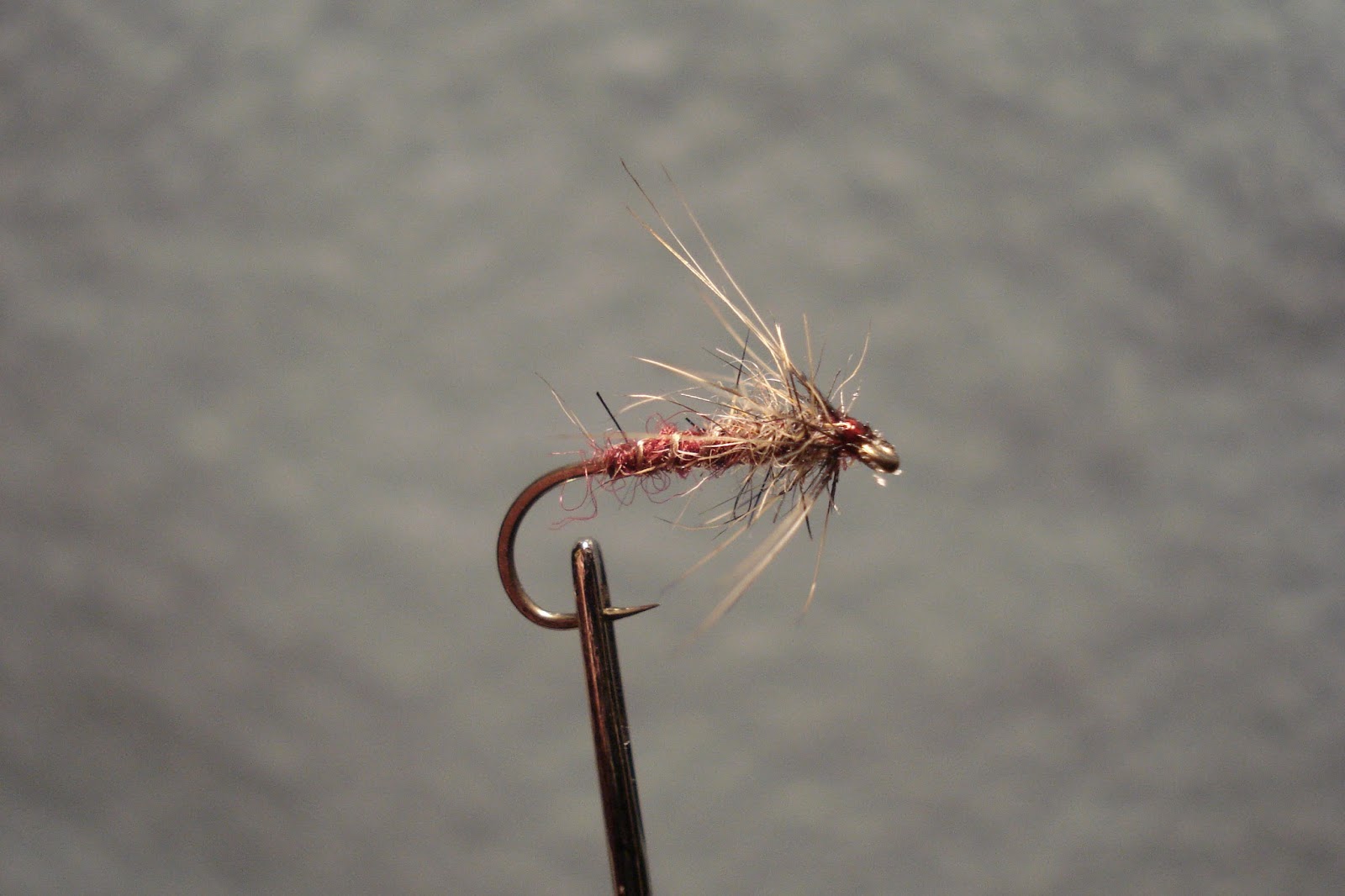
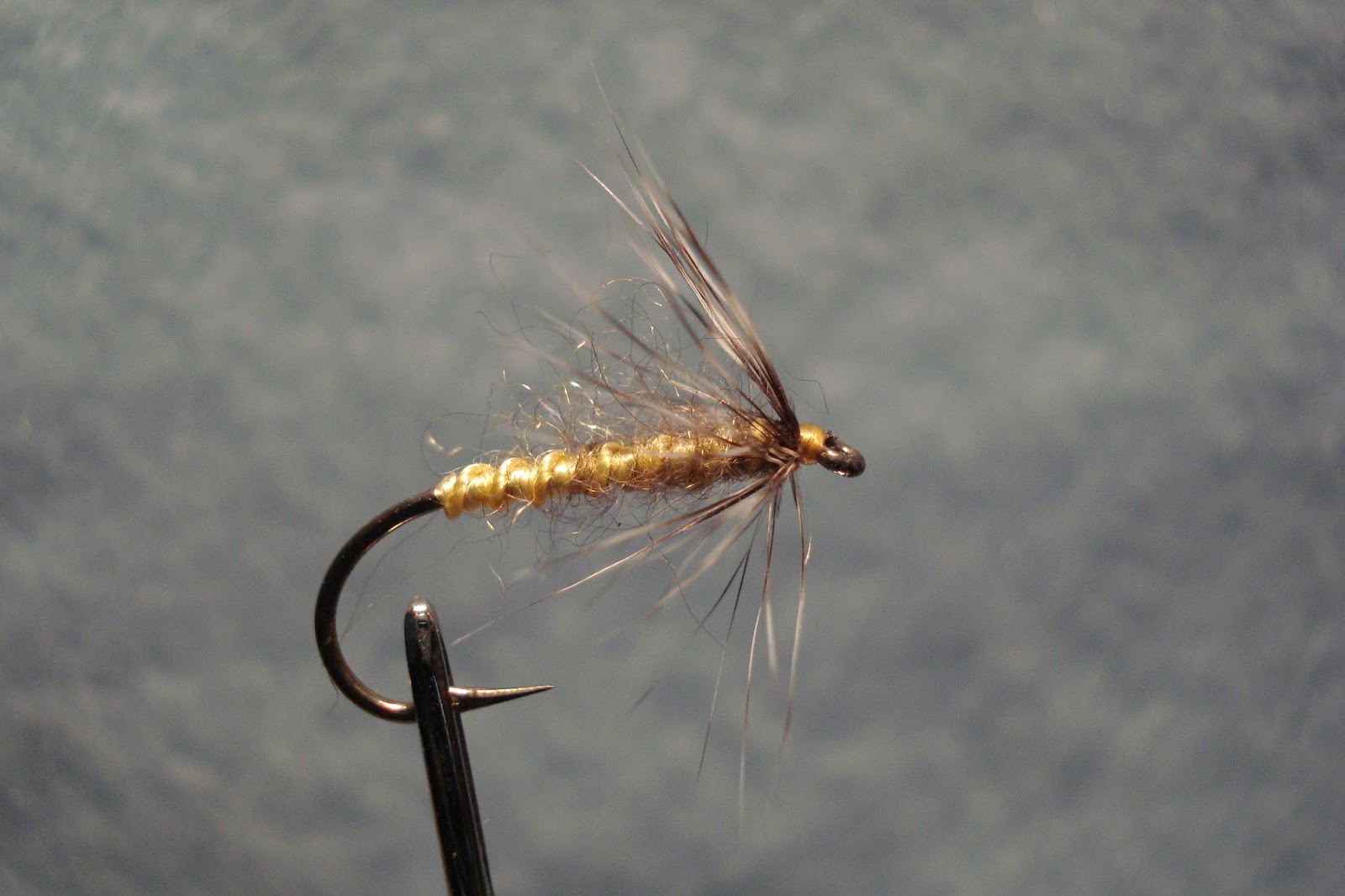
This dressing of the Stone Fly that Richard Bowlker describes in The Art of Angling (1757) departs from the general rule of the blog and uses a size 10 hook instead of a size 14. It also substitutes a blend of beaver fur and golden stonefly antron dubbed on rib of silk buttonhole twist, which, when wet, would be an apt substitute for Bowlker's “body with dark brown mohair, mixed with dirty yellow.”

Hook:

6-10
Thread:

Wood Duck
Body:

Silk button hole twist – Belding-Corticelli 3715 bamboo, size D
Rib:

Silk button hole twist – Belding-Corticelli 3715 bamboo, size D dubbed with an equal blend of beaver fur and golden stonefly antron
Hackle:

Grizzly cock


In a discussion of stoneflies in his Fly Fishing: The North Country Tradition (1996), Leslie Magee suggests that “of all the flies imitated by the flyfisher, the larger stoneflies are the least familiar; few of the that I meet on the riverside have ever handled a ‘creeper’ (the nymph or larvae) or an adult stonefly,” and that bait fishing with the stonefly was more common. While the popularity of bait fishing with the stonefly has passed, Magee points out that it was still popular in T. E. Pritt’s time, “when fishing the live creeper and the adult stonefly cast upstream was all the rage on several North Country rivers.” Despite Magee's assertion that the popularity of bait fishing with stoneflies had waned by the early twentieth century, Harfield Edmonds and Norman Lee devoted a chapter to it in their Brook and River Trouting (1916); “20 years after the publication of Brook and River Trouting upstream fishing with the creeper and live stonefly was virtually extinct” due to developments in angling gear and fly fishing methods.

Nevertheless, historical angling authors give testament to Magee’s assertion that fishing stone flies as bait was a centuries old practice, much like fishing nymphal and mature Green Drakes. John Kirkbride, for instance, expresses this preference in his Northern Angler (1837): the Stone Fly, “on a hot day, is a most destructive bait for trout,” and it “is seldom used as an artificial fly; for it is best to dab with it after it takes wing. It is here called the May-fly.” Michael Theakston likewise notes in his List of Natural Flies (1843), that the stone fly, the “Imperial Empress of all trout flies,” is “in general fished natural.” “After sunset she comes out,” he notes, “for her enjoyments are chiefly in the dusk and twilight of night and early morn; the whole family are then in motion—flying about—running among the stones, and paddling upon the waters.” Theakston explains that, to fish the stone fly successfully, the angler must “move, unseen, with easy motion up the stream, and dab the fly with precision on the eddies behind stones, or other places of succour where the trout takes his station; or let it glide free and natural down the current over his likely haunts; never drag it against the stream (unnatural for any fly) or suffer it to drown; but succour and recover it by easy lifts and gentle jerks, to keep it on the water alive and dry, for a dead fly hanging at the hook like a piece of wet moss, will not be taken on the top.” Theakston regards fishing the stone fly as an artificial as “a true trier of skill, and probably the best test of the general merits of the flyfisher. Each rustic craftsman along the banks of the winding streams, where the true art and science of flyfishing is best known and practised, greet with glee the presence of the stone fly.”

In the third edition of his Modern Trout Fishing (1950), some twenty-five years after bait fishing the stonefly went extinct, in Magee’s account, Roger Woolley emphasized how often the stone fly is fished as a natural, noting that “it is more used in its natural state than as an artificial. It is called the Mayfly on the north country rivers, where it hatches out in great numbers.” Woolley points out that “it is not always easy to procure a sufficient number of the natural flies for a day’s fishing, and then the artificial has to be resorted to, but the stone fly anglers prefer the natural fly is procurable.” He goes on to list eighteen dressings for smaller stoneflies, including five soft hackles like the Winter Brown that he attributes to the North Country tradition.

Although Woolley’s dressings are almost evenly split between winged and corresponding hackled versions, historical stone flies patterns were most often winged dressings. John Jackson’s Practical Fly-Fisher (1854) includes a winged stone fly, no. 32, the May-Fly, but notes that the fly is “generally fished natural, being large enough to swim a good sized hook, or two smaller ones tied double.” Theakston’s dressing is also winged, as is the Stone Fly that William Blacker includes in his Art of Angling (1843). Kirkbride, Alfred Ronalds in The Fly-fisher’s Entomology (1837), and John Turton’s Angler’s Manual (1836) provide dressings that seem to derive from sixteenth- and seventeenth-century antecedents that John Waller Hills describes in A History of Fly Fishing for Trout (1921).

Hills lists the Stonefly as one of the twelve most important flies to anglers, giving a brief account of early dressings from Dame Julianna Berner’s A treatyse of fysshynge wyth an Angle (1496) to Charles Cotton’s 1676 additions to Izaak Walton’s Compleat Angler (1657). Hills points out that the Stonefly “has changed neither in name nor in dressing. It is quite unmistakeable, a fat, stupid, clumsy clown, better at running than flying. The Treatise is as follows: ‘The stone fly, the body of black wool and yellow under the wing and under the tail, and the wings of the drake.’ Markham as usual makes the dressing more definite: the yellow under wings and tail is to be made with yellow silk and the wings are of a drake's down, not the quill feather. Cotton knew the fly well and gives an excellent account of its history: he made the body of dun bear's hair and brown and yellow camlet well mixed, making your fly more yellow on the belly and towards the tail, two or three hairs of a black cat's beard for tail, and long, very large wings of grey mallard. Though we use different furs from Cotton, his body survives unchanged in essence: but a hen pheasant's quill feather makes a truer wing than light mallard, and we like to add a hackle, either blue dun or greenish. But the changes are immaterial.”

Part of the “excellent account” that Hills attributes to Cotton includes a description of the Stone-Flies’ unique manner of hatching and eagerness of the trout to feed on them: “This same Stone-Flie has not the patience to continue in his Crust, or Husk till his wings be full grown, but so soon as ever they begin to put out, that he feels himself strong (at which time we call him a Jack) squeezes himself out of Prison, and crawls to the top of some stone, where he can find a chink that will receive him, or can creep betwixt two stones, the one lying hollow upon the other (which, by the way, we also lay so purposely to find them) he there lurks tills his wings be full grown, and there is your only place to find him (and from thence doubtless he derives his name) though, for want of convenience, he will make shift with the hollow of a Bank, or any other place where the wind cannot come to fetch him off.” Cotton notes that anglers often “dape or dibble” the natural Stone-Flie, “as with the [Green] Drake” and that fishing the fly is “much better toward 8, 9, 10 or eleven of the clock, at which time also the best fish rise, and the latter the better, provided you can see your Flie, and when you cannot, a made Flie will murder.”

In his Fly Fisher’s Guide (1816), George Bainbridge nods toward three traditions of fishing the stone fly. Not only is it “a deadly bait, used in the natural state,” but it is dressed after the fashion of Cotton's and Berners' precedent, winged and with a bear fur body. Brainbridge notes that it is also dressed as a hackled pattern, with “a long-fibred grizzled hackle from a cock’s back, without wings.” This latter dressing specifically recalls the Stone Flies of Richard Bowlker and his son Charles. Richard Bowlker provides a simple, soft hackle dressing for the Stone Fly in his Art of Flyfishing (1757). He describes the insect as “a large four-winged fly; bred from an insect in the water, called the water cricket; to be found in stony, gravelly brooks, or rivers; his belly is of a dirty yellow, his wings of a fine blue color, full of small veins, so that he is best made with a fine blue grizzle cock’s hackle; the body with dark brown mohair mixed with a dirty yellow.” Charles Bowlker offers a similar dressing in his 1776 edition, though its description reads more like a palmer: “This fly is made of the brown feather of a hen. His belly is of a dirty yellow and his back of the dark brown. His body is made of a yellow or brown spaniel’s hair, or Mohair, with the grizzled hackle of a cock around it.”


Breaking with the usual size 14 hook size for the blog, this dressing uses a 4x bait hook. It substitutes a cree hackle for the brown and grizzly hackles Charles Brooks requires.


Stonefly dressings are the stock-in-trade of modern American anglers, though they are often involved dressings. A notable exception is Charles Brooks' Montana Stonefly nymph. Brooks famously dressed heavily-weighted nymphal patterns “in the round” for fishing deep, boulder-studded pocket water of the western trout streams he favored—much like the water Theakston and the Bowlkers reference—and he described his methods of fishing and dressing them in Nymph Fishing for Larger Trout (1976). Though it is a bit of a stretch, many, such as his Montana Stone Fly, are essentially soft hackles or flymphs, not far removed in form the Hare's Ear Flymph that Dave Hughes describes in Wet Flies (1995). This fly recalls the Bowlkers own dressing, though it is unlikely Brooks had access to their books. Brooks dressed his Montana Stone on long, heavy wire hooks in sizes 4 to 8 and weighted them heavily in order to represent the “Pteronarcys genus of stoneflies, especially P. californica,” also known as the Giant Salmon Fly Nymph, a must different stone fly than the one Alfred Ronalds describes: a fly hatching from the beginning of April until the end of May, of the “Order, Neuroptera. Family, PerlidÅ“. Genus, Perla. Species, Bicaudata.” Ronalds' stonefly is likely much more closely related to the fly Ernest Schwiebert describes in Nymphs (1973) as Perla Capitata, the Great Stonefly Nymph, Art Flick's Stonefly Creeper. Brooks’ Montana Stone is somewhat more complicated to dress than the Bowlkers:

Tail: Six fibers of raven or crow primary.
Rib: Copper wire.
Body: Black fuzzy yarn, four strand.
Hackle: One grizzly saddle and one grizzly dyed dark brown. Strip hackles off lower hackles before tying in.
Gills: Light gray or white ostrich herls.
Thread: Black nymo 3/0.”

Brooks directs fly tiers to: “Tie in thread at front, wind to bend. Lacquer shank. Tie in tail fibers and split to form forked tail, three fibers per side. Tie in ribbing and yarn. Wind thread forward, half hitch twice, and break off. Lacquer shank again. Wind yarn to eye, back to bend, forward to eye and back to base of thorax. Tie off, tying in thread at same time. Wind rib and tie off. Tie in one strand of ostrich herl, and both hackles by the butts. Strip fibers off lower side of both hackles. Wind two separated turns of hackle, one at the base of the thorax and another halfway between there and the eye. Both colors of hackle should lie one against the other. Tie off. Wind ostrich herl forward at the base of the hackles, tie off. Spiral thread forward and finish head large and lacquer well.”

Wednesday, March 22, 2017

Cumberland; or, Crimson Partridge


Hook:

12-18
Thread:

Red Pearsall’s gossamer silk
Body:

Tying silk
Hackle:

Medium partridge


In his treatment of Hills’s A Summer on the Test (1924) in Two Centuries of Soft-Hackled Flies (2004), Nemes cites Hills’s passing comment on the pattern: “One of the softest, most compressible, patterns is the partridge hackle, and, whether this be the reason or not, I consider it the best sunk fly on the Test. Its body, of silk, can be of many colours. I find the old Cumberland pattern, the orange partridge, best, and next to that the red.” By Nemes's account, anglers  on the Test seemingly drew little distinction between the red and orange bodies, although the Partridge and Orange has endured as a more distinct, popular fly for generations of anglers.

In The Soft-Hackled Fly Addict (1981), Sylvester Nemes names the Cumberland, a fly which John Waller Hills seemingly only mentions in passing. Nemes notes that “Hills believed this fly to be the most effective sunk fly on the Test, particularly on hot days and in slow water,” and he provides this dressing for Hills’s fly:

Body: Red or orange silk floss
Hackle: Medium partridge
Rib: Narrow gold wire

Dressed with a rib, the Cumberland becomes the Orange Partridge that Harfield Norman and Edmond Lee list in their Brook and River Trouting (1916). In his River Keeper (1934), which Nemes also notes, Hills recalls a similar, ribbed pattern favored by the riverkeeper William Lunn, the Red Partridge Hackle.

In list of his thirty North Country flies, included at the head of Fly Fishing: The North Country Tradition (1994), Leslie Magee attributes the dressing, the Crimson Partridge, to an unnamed 1887 publication by James Blades. Robert L. Smith includes the Crimson Partridge, one of James Blades’ patterns “taken from T K Wilson’s angling articles in the Dalesman magazine of 1949,” in an appendix at the end of his The North Country Fly: Yorkshire’s Soft Hackle Tradition (2015). He additionally notes that the Crimson Partridge is a “splendid fly in a full brown water from the beginning of the season to the end.” Many of the manuscript and publications that Smith includes list the fly less as a dressing for hot days and slow water, like Hills, and more of a dressing for discolored water.

Wednesday, June 1, 2016

Blue Dun

This dressing substitutes pale yellow seal's fur for the pale "wool, mohair, or fine dyed pig's wool" that John Younger prescribes and uses starling undercovert.

Hook:

12-16
Thread:

Yellow
Body:

Blue rabbit underfur and pale yellow seal's fur
Hackle:

Starling undercovert


W. H. Lawrie’s Scottish Trout Flies (1966) reproduces lists of flies like John Younger’s list for fishing the Tweed. Of the six flies Younger dressed, the unnamed fly for April and May. His fly, undoubtedly a Blue Dun, is dressed with

“Wing: Transparent feather from the wing of the bunting or that of a full grown cock sparrow.
Body: Blue water-rat fur mixed with equal proportion pale yellow, inclining to white, wool, mohair or fine dyed pig’s wool.”

Younger includes one additional dressing for April and May with the same body, but hackled with a body feather from a grouse. G. E. M. Skues suggested that Younger’s dressing imitated a “small darkish Watery” that hatched from “May throughout the season,” No. VII on his list of flies for representing the Medium Olive. He adapted Younger’s pattern thus:

Hook.—No. 16 down-eyed Pennel sneck.
Tying Silk.—Bright yellow, waxed with clear colourless wax.
Hackle.—Dark-blue hen short—not more than two turns.
Whisks.—Two strands of darkish blue unspeckled feather from neck of cock guinea fowl- short.
Body.—Thinly laid dubbing of mole’s fur mixed with yellow seal’s fur.”


Skues also suggested that “the body may be varied by using English squirrel blue fur instead of mole.”

Roger Woolley notes in the last edition of his Modern Fly Dressing (1950) that the olive fly is the usually known as the Early Olive Dun. He introduces his dressings by noting that, “although entomologies tell us there is no such fly in nature as the Blue Dun, anglers always have had and will have their Blue Dun. It is an imitation of the large, early spring Olive Dun, a fly appearing in early spring, the first of the Ephemeridæ family to show on our streams.” A proliferation of olive dun colored bodies matched with dun hackles, however, makes pinpointing which are intended to match Woolley’s mythological Blue Dun a challenge. The Waterhen Blae, for instance, might equally serve the purpose. To limit the scope of these possibilities, soft hackled Blue Dun patterns here will to create an olive shade that the yellow silk underbody accents, either by mixing yellow and blue or by overwrapping the main body with a yellow or olive rib.

John Waller Hills traces the development of the Blue Dun in A History of Fly Fishing for Trout (1921) from Dame Juliana Berners and her A treatyse of fysshynge wyth an Angle (1496) to the twentieth century: “The progress of this fly is of extraordinary interest. It starts with a black wool body, dark mallard wings and possibly a jay's blue feather as hackle. This dressing is too dark altogether in body and wing. Cotton lightens both, and gives a fairly good fly, and Chetham a still better one. His Blue Dun has no hackle it is true, but its rough body of fox fur could easily be picked out, and except for this it is almost as it now exists. But there were one or two improvements, the snipe wing, which I think is better than the starling for the sunk fly, and mole's fur body. So we get the fly of to-day.” Hills suggests that flies like the Old Blue Dun are variations of the Blue Dun, utilizing a rib in place of blended blue and yellow body. The effect either way, he implies, simulates the olive hue that is characteristic of the Olive Dun. In their Art of Angling (1757, 1774), both Richard and Charles Bowlker include dressings for the Blue Dun that includes bodies “made of a blue fur of a fox, or the blue part of a squirrel’s furr, mixed with a little yellow mohair.”

Many dressings of the Blue Dun, like those of the Bowlkers, are winged. John Kirkbride includes, as he often does, dressings for winged flies and for hackles: “when dressed as a hackle-fly, a fine feather from the underside of the wing of the jack-snipe, or moor-pout, answers very well for the hackle.  The body must be the same as described above”—“from the light blue fur of the rabbit, or the grey squirrel, mixed with a very little yellow mohair.” The “moor-pout” is a Scottish term for a young grouse.


This dressing of Vernon S. Hidy’s Blue Dun uses primrose Pearsall’s gossamer silk for the tying silk and light olive Pearsall’s gossamer silk for the rib.


While many historical soft hackle patterns use a blue fur body mixed with yellow to create an olive effect, others are dubbed on dubbed on primrose or yellow thread and include a rib. James Leisenring’s angling companion, Vernon S. Hidy, included such a dressing for the Blue Dun in Chapter 10 “Soft-hackle Nymphs—the Flymphs” of The Master’s on the Nymph (1979): “Sizes 12, 14, 16; muskrat fur on primrose silk; olive-yellow thread ribbing; two turns of blue dun hen hackle.” The Old Blue Dun that Leisenring includes in The Art of Tying the Wet Fly & Dressing the Flymph (1941) seems dressed to achieve the same effect.

Wednesday, March 23, 2016

Light Hare's Hackle

This dressing substitutes hare’s cheek for hare’s body fur.

Hook:

14-18
Thread:

Olive Pearsall’s gossamer silk
Tail:

Pale ginger Indian rooster hackle
Rib:

Gold twist
Body:

Light fur from a hare’s cheek
Hackle:

Pale ginger Indian rooster hackle


In Two Centuries of Soft-Hackled Flies (2004), Sylvester Nemes shared patterns and angling techniques from John Waller Hills’ River Keeper (1934), including some patterns by William James Lunn, riverkeeper for the Houghton Club on the River Test. Nemes notes that “where cock hackles are suggested, I would suggest a very good grade of hen hackle from Whiting or Metz” and that he has “also taken the liberty of suggesting other replacement materials.” He suggests dressing Lunn’s Light Hare’s Hackle with

“Hackle: Pale buff.
Body: Light fur from hare’s body spun on Pearsall’s gossamer olive silk, ribbed with gold twist.
Tail: Pale buff.” 

Wednesday, March 9, 2016

Black Louper


This palmered Black Louper uses dark brown thread and assigns raw wool for the body. 

Hook:

12-14
Thread:

Blue
Rib:

Peacock herl
Palmer:

Red furnace
Body:

Raw Black Welsh Mountain wool


In A treatyse of fysshynge wyth an Angle (1496), Dame Juliana Berners recommends the Black Louper for May fly fishing, dressing it with “the body of blacke wull & lappyd abowte wyth the herle of the pecok tayle: & the wynges of the redde capon wt a blewe heed.” Given the vagaries of early modern English syntax, Berners' exact meaning is unclear. While she notes that the peacock herl rib should be “lappyd abowte” the black wool body, the "redde capon's" hackle might  be dressed two ways. The Black Louper might be dressed as a palmer, above, or as a hackle, below. In each instance, the hackling serves to imitate the insect's "wynges."

This hackled dressing follows the same specifications for thread and body materials as the palmer above.


What the Black Louper might represent is even less clear than the dressing she assigns it. John Waller Hills, whose History of Fly Fishing for Trout (1921) shows a particular indebtedness to the historicity of Berners’ twelve dressings, cannot determine what the fly represents: “it is possible to identify clearly eleven out of the twelve. The remaining fly is the Black Louper, appearing in May, which seems to have been a hackle fly, and corresponds to our Black Palmer or Coch-y-Bonddhu, but cannot be identified exactly.”

The Oxford English Dictionary lists the meaning of the word “louper” as “some kind of artificial fly” and cites only one example of the word’s usage in print—Berners’ own in her Treatyse. The OED also cites the word “loup” as an Old Norse verb meaning “to leap,” a word commonly used in the late fifteenth century when Berners was writing. If her intention was to describe the behavior and color of a particular insect, a “black leaper," then she was likely describing a terrestrial, as Hills suggests. The combination of brown-black wool, iridescent bronze peacock herl, and a deep red hackle with a deep black list, however, suggests a cricket rather than a beetle.

Wednesday, February 24, 2016

Red Brown

This dressing opts for yellow rather than orange silk for the body and tying silk. It also reconfigures Michael Theakston's mostly winged  patterning, which uses a small fur thorax to represent legs beneath a soft hackle winging, into a more traditional soft hackle form.

Thread:

Yellow Pearsall’s gossamer silk
Abdomen:

Tying silk
Thorax:

Gray squirrel fur
Hackle:

Speckled hen hackle - here, Whiting Brahma


Early stoneflies like the February Red “are the earliest hatchings of the aquatic angling flies, and the first of the season to raise and cheer the lone trout,” Michael Theakston explains in his List of Flies (1843), “the harbingers of his better days; the warm sun draws out the firstlings of these hardy families; and they increase in numbers as the season advances, and the weather permits.” While Theakston does not cite a February Red, he does include a Red Brown as a dressing for February with “wings, from the landrail, or a slightly broken feather from a light freckled brown hen, or selected from the brown owl; orange or yellow silk for the body, with a few fibres of mohair or squirrel’s fur, at the breast, in imitation of the legs.” Theakston suggests two different colors for the body, but this comes as little surprise since every angling author seems to prefer a different color to imitate the same insect. 

John Waller Hills famously argued in his History of Fly Fishing (1921) that the Orange Patridge or Partridge and Orange, much after the fashion of Theakston, is the classic dressing for the February Red, and he conjectures that Dame Juliana Berners' gray wool-bodied Donne Fly, a part of her twelve fly list in A treatyse of fysshynge wyth an Angle (1496), was also originally dressed to match this early stonefly hatch. Both James Chetham's Angler’s Vade Mecum (1681) and Charles Cotton’s additions to Izaak Walton’s Compleat Angler (1667) include a dressing for the Red-Brown (or Lesser Red-Brown) for February angling. Cotton devotes more explanation to this fly than many: "Where the Red-Brown of the last Month ends, another almost of the same colour begins with this, saving that the dubbing of this must be of something a blacker colour, and both of them warpt on with red silk; the dubbing that should make this Flie, and that is the truest colour, is to be got of the black spot of a Hogs ear: not that a black spot in any part of the Hog will not afford the same colour; but that the hair in that place is by degrees softer, and more fit for the purpose: his wing must be as the other, and this kills all this Month, and is call’d the lesser Red-Brown." (The January dressing that Cotton references and adjusts for February included very specifically "the dubbing of the tail of a black long coated Cur, such as they commonly makes muffs of; for the hair on the tail of such a Dog dies, and turns to a red Brown.")

This dressing of Alfred Ronald's Red Brown used claret thread, and substitutes a blend of claret acrylic and gray squirrel for the body and a rib of doubled and twisted java brown Pearsall's gossamer silk. It uses a medium ginger hackle in place of the coppery dun Ronald's prescribes.


Likewise, Richard and Charles Bowlker both include for the Red Fly in their editions of The Art of Angling (1758, 1774), but theirs are winged wet flies. Alfred Ronalds follows their cue in his Fly-Fisher’s Entomology (1836). The Red Fly is the first on his list and is also dressed as a winged wet, though he does, as usual, offer an alternative buzz or hackle dressing that uses a "copper tinged dun hackle." The body he prescribes is much more complicated than the simple silk recommended by other authors: "The dubbing is composed of the dark red part of squirrel's fur, mixed with an equal quantity of claret-coloured mohair, showing the most claret colour at the tail of the fly. This is spun on, and warped with brown silk thread." 

Wednesday, December 31, 2014

Dark Hare's Hackle


Hook:

16-20
Thread:

Olive Dun
Body:

Dark blue underfur from hare’s back, thicker toward the eye of the hook, on olive Pearsall’s Gossamer Silk
Hackle:

Dark dun cock’s hackle


In Two Centuries of Soft-Hackled Flies (2004) Sylvester Nemes includes a review of three books by John Waller Hills. The last of Hills’ books, River Keeper(1934), is a largely biographical account of William James Lunn, keeper of the River Test.

In his own account of Hills’ account of Lunn’s fly tying, Nemes suggests using “a very good grade of hen hackle from Whiting or Metz” in any dressing “where cock hackles are suggested,” noting that he has “taken the liberty of suggesting other replacement materials” in giving Lunn’s patterns. He dresses Lunn’s Dark Hare’s Hackle:

“Hackle: Dark blue cock hackle.
Body: Dark fur from hare’s back cut up and mixed. Spun on olive silk.”

Wednesday, August 13, 2014

Greensleeves


This dressing substitutes an American woodcock covert for English woodcock undercovert T. E. Pritt lists, as well as using embroidery thread in place of silk. Also, the head is finished using the tan  thread used to dress the Greentail.
Hook:

14-16
Thread:

Green
Body:

Embroidery thread – DMC 987 dark forest green
Hackle:

Woodcock


T. E. Pritt lists his Greensleeves, No. 48, as an alternative to the Greentail or Grannom in Yorkshire Trout Flies (1885) and its subsequent edition, North-Country Flies (1886). In the former, he notes that the dressing “differs little from the Greentail, and is probably a fanciful edition of that fly, useful only on dull, sultry days, and occasionally in the evening. Not generally dressed, but will now and then kill fairly.” He dresses it as follows:

“WINGS.-Hackled with a feather from the inside of a Woodcock’s wing of from a hen Pheasant’s neck.
BODY.-Bright green silk.
HEAD.-Ditto.”

Pritt refers to the Greensleeves as a “fanciful edition” of the Greentail. In What the Trout Said (1982), Datus Proper defined what fanciful means in relation to British dressings: “The term is British, and Americans are often unaware that fancy does not mean gaudy. There is room for confusion, since some fancy flies also happen to be gaudy. Many others are sober creations that happen to be products of an angler’s fancy. John Waller Hills says that a fancy fly may imitate insect life generally but cannot be ‘connected with any particular species or genus or group.’ By way of example, he gives Stewart’s famous Black, Red, and Dun Spiders, which are small, drab, wet flies for upstream fishing. Hills then distinguishes fancy flies from ‘general’ flies, which ‘imitate a genus or group, but not an individual.’ The difference is a fine one.”

In the later edition of Pritt’s text, North-Country Flies (1886), Pritt adds more specific information on the lineage for the Greensleeves, noting that it is “Another form of Ronalds’ ‘Gold-eyed gauze wing,'" which Alfred Ronalds includes in the Fly-Fisher’s Entomology (1836) as No. 34, a fly dressed to match a July hatch. The Gold-eyed gauze wing, he explains, “is rather a scarce insect upon some waters, but where it is found affords great sport on windy days.” Ronalds dresses the fly thus:

“BODY. Very pale yellowish green floss silk, tied on with silk thread of the same colour.
WINGS AND LEGS. The palest blue dun hackle which can be procured.”

The name Greensleeves likely derives from an old English folk ballad with North Country associations. The ballad “A Newe Northen Dittye of ye Ladye Greene Sleves,” was registered by Richard Jones in the autumn of 1580. What the connection between the fly and a folk ballad might connote is any angler’s guess.

Wednesday, June 18, 2014

Black Gnat


Hook:

16-20
Thread:

Red or wine
Body:

Black silk or fibers from a crow’s secondary wing feather
Hackle:

Starling shoulder feather


The dressing above is follows James Leisenring’s pattern for the Black Gnat in The Art of Tying the Wet Fly and Fishing the Flymph (1941). His pattern in full calls for:

“HOOK  14, 15.
SILK  Crimson or claret.
HACKLE Purplish black feather from the shoulder of a cock starling.
BODY  Black silk or two or three fibers from a crow’s secondary wing feather.
WINGS Dark starling optional.”

Harfield Edmonds and Norman Lee include a delicate dressing of the Black Gnat as no. 22 in their Brook and River Trouting (1916):

"WINGS.-A few fibres from a light blue Hen's hackle put on as a single wing.
BODY.-Black silk, No. 9.
LEGS.-Rusty black Hen's hackle.
HEAD.-Black silk.

Middle of May to end of August.
For close days.”

The Black Gnat has been a popular fly in angling literature. In Minor Tactics of the Chalk Stream (1910), G. E. M. Skues dressed it simply, in a manner that Leisenring seems to have followed:

Wings: Palest snipe rolled and reversed.
Body: Black tying silk with two turns of black ostrich herl or knob of black silk at shoulder.
Legs: Black hen or cock starling’s crest, two turns at most.
Hook: No. OO.”

John Waller Hills traces the evolving popularity of the Black Gnat in his History of Fly Fishing for Trout (1921), but he notes how hard imitating the insect is and how unsuccessful most imitations seem to be: the “fly has three characteristics; a small body, transparent wings, and, in the male, particularly short ones . . . These three characteristics are the fly: and every one of these three Cotton observed and copied. After this it is hardly necessary to trace the fly down. The commonest dressing, however, not I think the best, is black ostrich herl body, and either some sort of clear wing, or more usually wingless, with a dark or black hackle. So Bowlker dressed it: and so did Francis and many others. Nearly every writer agrees that it is a difficult fly to copy. It is a most unsatisfactory fly to fish with.”

T. Donald Overfield similarly traces the history of the fly, but tracks it through five different historical dressings to the modern day in his column “Trout Flies of Yesteryear” published in Fly Fisherman magazine. He lists a “present day version,” which is a dry fly pattern by Commander C. F. Walker in The Art of the Chalk Stream (1968). Prior to that, R. S. Austin, who tied flies for G. E. M. Skues and developed the famous Tup’s Indispensible, included a Black Gnat pattern “in his unpublished papers dated 1890.” F. M. Halford, too, tied a Black Gnat that he described in Floating Flies and How to Dress Them (1886). Overfield, like Hills, makes note the Bowlkers’ eighteenth-century dressing for the Black Gnat, as well as it's earlier precedent, the dressing that Charles Cotton includes for March in his 1676 additions to Izaak Walton’s classic Compleat Angler. He dressed it: with “the dubbing either of the fur of a black water-Dog, or the down of a young black water-Coot, the wings of the Male of a Mallard as white as may be, the body as little as you can possibly make it, and the wings as long as his body.”


Wednesday, April 23, 2014

Shell flye at saynt Thomas daye; Grannom; or Greentail

This dressing assigns an olive dun thread and substitutes antron for olive wool and the black-and-white barred snipe's under wing feather for the  black-and-white barred English buzzard hackle Dame Juliana Berners gives for the pattern.

Hook:

14-16
Thread:

Olive Dun
Rib:

Peacock herl
Body:

Light olive antron
Hackle:

Webby grizzly hen hackle


In her early modern text, A treatyse of fysshynge wyth an Angle (1496), Dame Juliana Berners provides a pattern for the Grannom that would come to resonate through angling literature. Her pattern calls for the Shell flye at saynt Thomas daye to be dressed with “a body of grene wull & lappyd abowt wyth the herle of the pecoks tayle: wynges of the bosard.”

John Waller Hills devotes more attention to the Grannon than the eleven other prominent patterns of angling literature that he traces in his History of Fly Fishing for Trout (1921). His first step in tracking the lineage of the pattern is determining when the insect that the fly imitates emerges. Berners places it in July, but his experience indicates that the “Grannom comes up in April and lasts about a fortnight: the dates of its appearance and disappearance are clearly marked. The Translation of St. Thomas of Canterbury is 7th July, and I consider the Treatise particularly accurate in dates, and I never saw a Grannom, or heard of one being seen, so late as that. So reluctantly I rejected it. But my skepticism was considerably shaken by finding that Ronalds uses Shell Fly as a synonym for Grannom and also found the fly, or one like it, in trouts’ stomachs in August; and in his fifth edition says that the Grannom if dressed buzz is a good fly all the summer months into September [Ronalds’ dressing is below]. Cotton gives the Shell Fly for July but considers that it was taken by the trout for the palm that drops off the willow into the water, and other writers, who have cribbed from the Treatise or Cotton, also give it . . . Chetham gives the first undoubted reference. He calls it by its common name of Greentail in the list of flies in his Appendix. Its body is from a brown spaniel’s ear, the tail end of sea-green wool, and wings from a starling’s quill feather. Bowlker dressed it with a body of fur from the black part of a hare’s face, ribbed with peacock herl, two turns of grizzled cock’s hackle at the shoulder, and wings from a finely mottled pheasant’s wing feather. He found it no advantage to imitate the green tail of the female fly . . . the dressing has varied little in the two hundred and forty years since Chetham described it. Pritt in his Yorkshire Trout Flies (1885) give a good modern dressing: wings hackled from inside a woodcock’s wing or partridge’s neck or under a hen pheasant’s wing: body lead-coloured silk with a little fur from a hare’s face and the lower part green silk.”

The rear half of the body is dressed with green Pearsall’s Gossamer Silk and dubbed hare’s ear for the front half of the body. It also substitutes the marginal covert of an American woodcock for the English woodcock undercovert.


Hills' recounting of Pritt’s dressing for No. 33, the Greentail (Grannom Fly) is almost verbatim.  It is worth noting that Leslie Magee also list’s T. E. Pritt’s Grannom or Greentail as one of his thirty preferred flies in Fly Fishing: The North Country Tradition (1994). The similarities between Pritt’s Greentail and Alfred Ronald’s Grannom lend some creedence Hills’s claim that dressing for the caddis have changed little over time.

Alfred Ronalds’s dressing for the No. 14 Grannom or Greentail in beautifully illustrated The Fly- Fisher’s Entomology (1836) allows for a wet fly or palmered dressing:

“BODY. Fur of hare’s face left rough, spun on brown silk. A little green floss silk may be worked in at the tail to represent the bunch of eggs there.
WINGS. Feather from the partridge’s wing, and made very full.
LEGS. A pale ginger hen’s hackle.

Made buzz with a feather from the back of the patridge’s neck, wound upon the above body.”

Similar dressings also appear in Richard and Charles Bowlker’s Art of Angling (1758, 1774),  John Turton’s Angler’s Manual (1736), John Kirkbridge’s Northern Angler (1737), Michael Theakston’s List of Natural Flies (1843), John Jackson’s Practical Angler (1854), and E. M. Tod’s Wet-Fly Fishing (1903), in which Tod notes “I give the dressing of this fly because it is a favourite well known. I very seldom use it myself.”